Things to See & Do in Luxor, Egypt

Luxor is the very definition of an archeological treasure with temples and royal tombs that made history and placed this ancient capital on the map centuries ago. Cairo may be synonymous with the Pyramids of Giza, but Luxor is where Howard Carter once discovered Tutankhamun and his burial chamber, and where many Pharaohs were laid to rest in the Valley of the Kings.
The City of a Hundred Gates has plenty to offer from breathtaking views of the Nile to ancient statues that tower over burial sites like guardians who never sleep. The following list will help you make the most out of your visit to Luxor, Egypt, and hopefully, cross a few places off your Egypt bucket list.
1. Colossi of Memnon
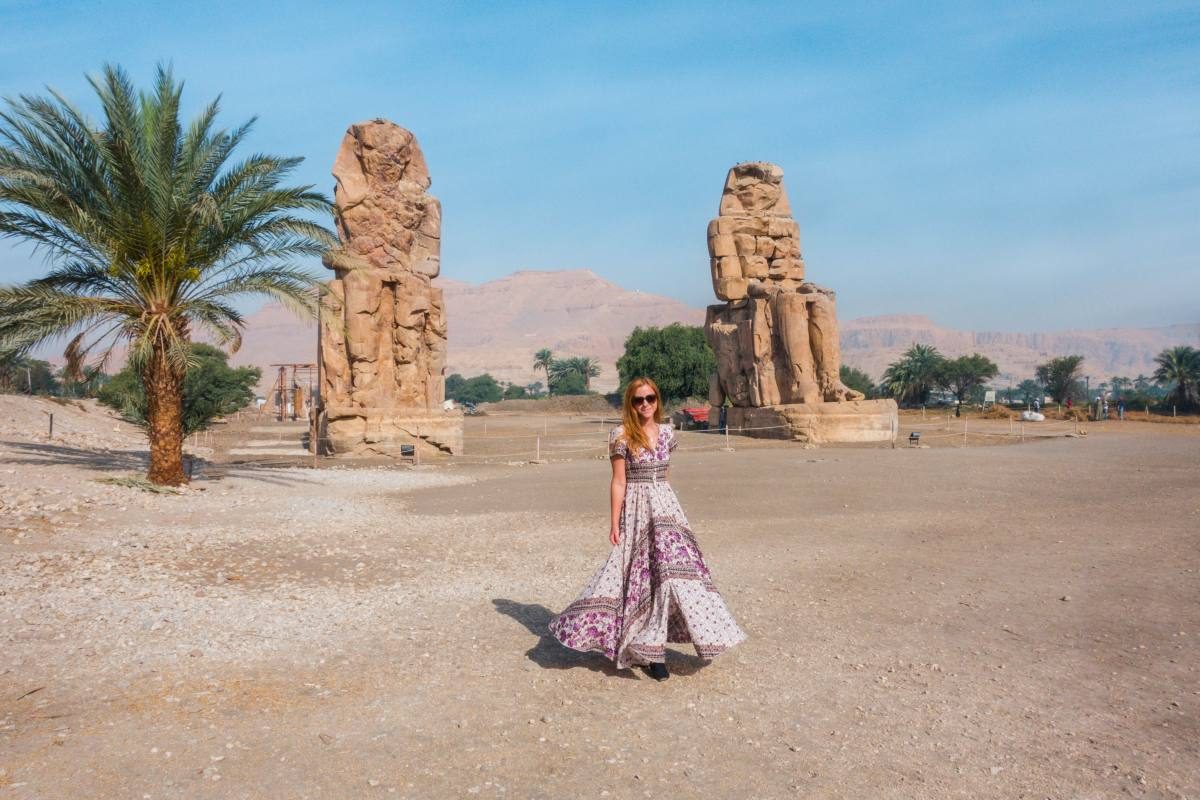
Waking up early will help you avoid long lines and crowded tombs. It also means that you get to spend time admiring the giant statues of Pharaoh Amenhotep III before tourists begin to flock to the area to take pictures in front of these West Bank giants.
The statues once belonged to an impressive mortuary temple that was designed with the Nile in mind. However, the river ended up flooding the temple, leaving it in ruins. The Colossi of Memnon are known as El Collosat or El Salamat by the locals.
There’s no admission fee to enter the area, so it’s a really good free thing to do in Luxor!
Location: The statues are hard to miss and are located on the West Bank, half a kilometer east of the ticketing office that belongs to the Antiquities Inspectorate.
2. Mortuary Temple of Hatshepsut
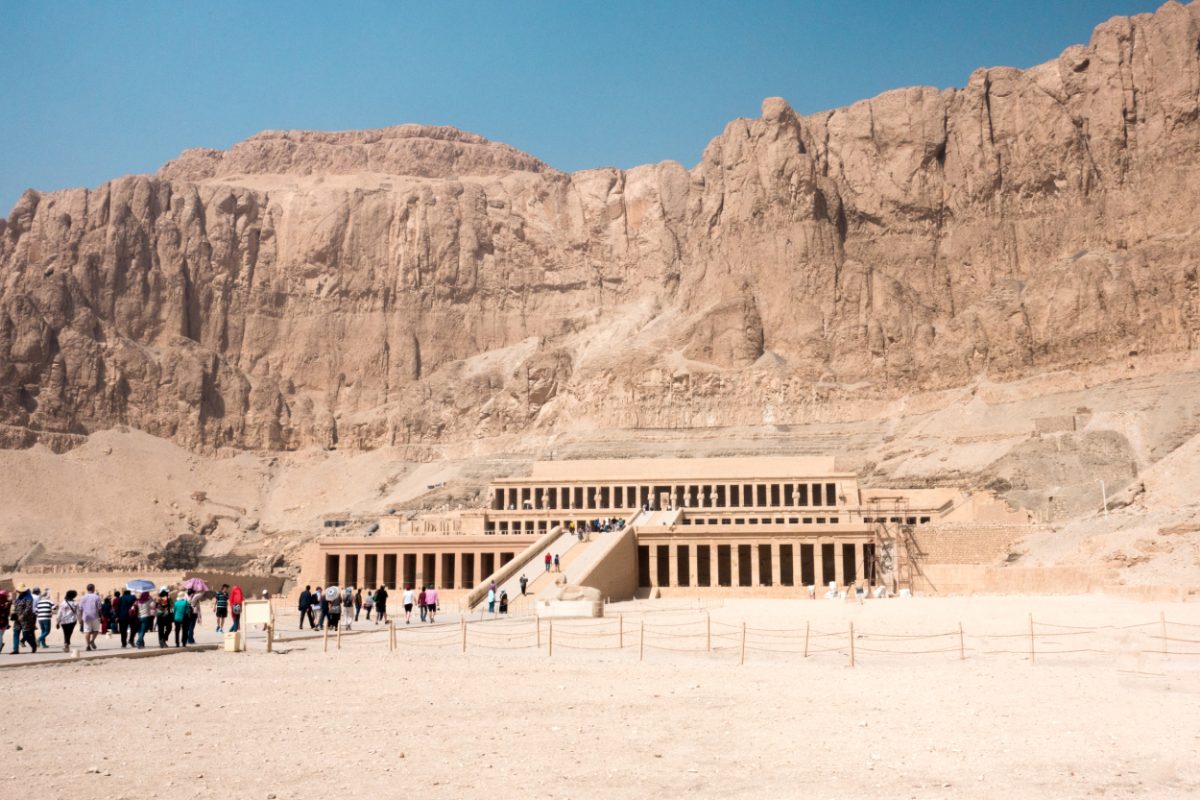
This great monument was built in honor of Ancient Egyptian gods who you’ll find immortalized in paintings and reliefs that adorn the walls of this impeccably designed temple. It also showcases the life of Queen Hatshepsut herself whose reign was described as prosperous and peaceful.
The Queen turned Pharaoh had many achievements that were carved into the walls and pillars of her temple. Since Queen Hatshepsut admired the mortuary temple of Mentuhotep II, she had hers built using the same model, but at a grander scale. It is said that apart from Rameses II, no other Egyptian ruler erected monuments as impressive as Queen Hatshepsut did.
Hatshepsut was the first female ruler of ancient Egypt, but her legacy and name were once desecrated and buried by her stepson Thutmose III. Luckily, they were discovered again by modern excavations and scholars who were able to put the pieces back together and breathe life into her memory.
Opening Hours: 6 am – 5 pm
Location: Kings Valley Road – entrance to Valley of the Kings
3. Valley of the Kings
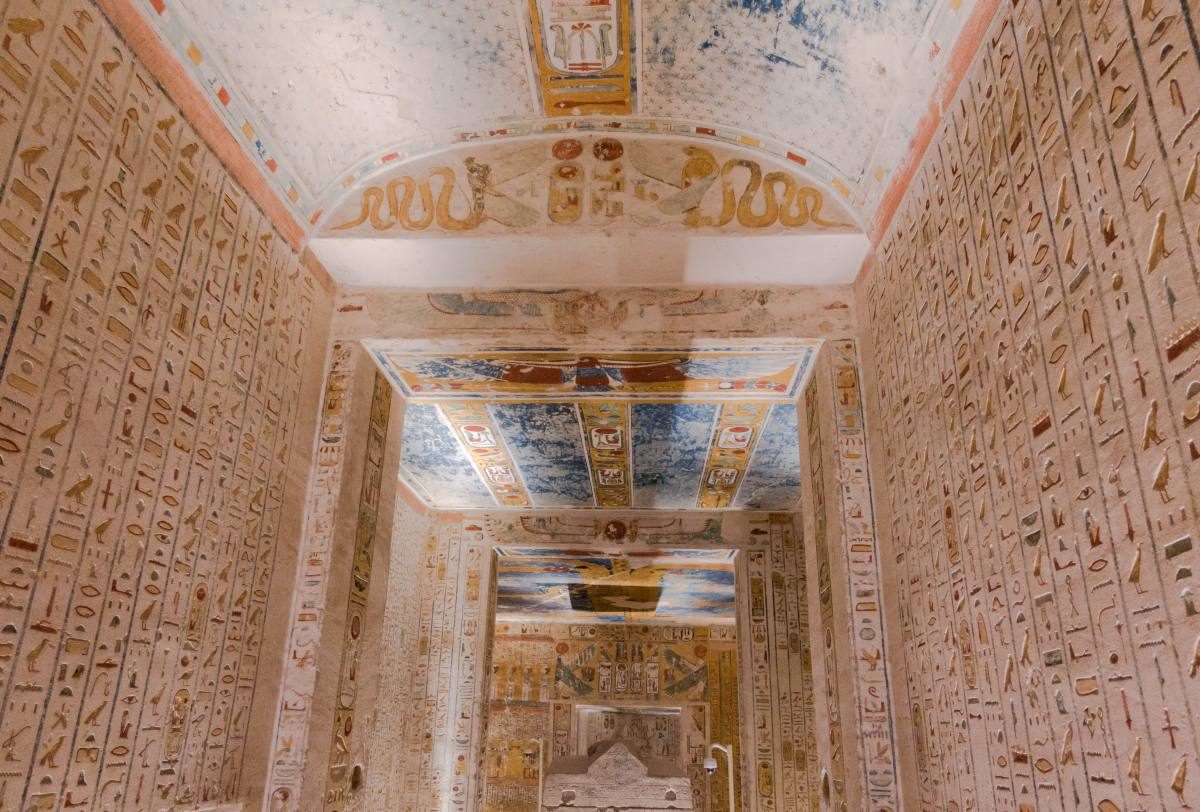
Home to 63 royal tombs, this incomparable valley gives storytelling a new meaning with ancient colored reliefs that speak volumes about the Pharaohs who once ruled Luxor. The Valley was chosen by the New Kingdom Pharaohs as their final resting place due to its location and proximity to the Nile River.
The underground tombs were designed with the afterlife in mind and so they were stocked with food and wine as well as sacred objects and mummified animals that were meant to accompany the Pharaoh on his journey. Nowadays, visitors are allowed access to 18 tombs that showcase the wealth, status, and symbolism that once belonged to these ancient rulers.
The tombs of Tutankhamun and Ramesses VI are a must-visit, especially the tomb of Tut since it was recently renovated and boasts fully painted walls depicting scenes from the underworld. The tomb still contains the mummy of Tut, but keep in mind that cameras are not allowed here or in the tomb of Seti the First, so you will be unable to commemorate this occasion by taking pictures inside the chamber.
However, you can purchase a photo permit for 300 LE in order to capture the history and magic of the other tombs.
The cost of admission to different tombs usually costs around 200 to 250 LE per person, depending on the currency variations with the dollar. Students and of course get discounts on showing a valid ID. But the tickets to the special tombs are sold separately.
- Ticket to visit Tutankhamun costs 300 LE.
- Ticket to visit Seti The First costs 1000 LE.
- Ticket to visit Rameses V and Rameses VI costs about 100 LE.
Of course, if you took advantage of the Luxor Pass, you can enter Valley of the King tombs as well as museums and archaeological sites by simply paying USD 100 or Eur 90. Paying USD 200 or Eur 180 also gives you entry to see King Tut here and Queen Nefertari over in the Valley of the Queens.
Opening Hours: 6 am – 5 pm. The last ticket is sold at 4 pm
Location: The Valley is located on the West Bank not too far from the Mortuary Temple of Hatshepsut. However, to avoid the steep walk and the scorching sun during summer, you can hire a taxi from the temple parking lot to take you straight to the Valley of the Kings.
Or you could join one of these group tours with a knowledgeable guide enlightening you as you walk through the tombs.
- Valley of the Kings with East Bank and West Bank
- Hurghada to Valley of the Kings and Luxor City
- Temple of Hatshepsut, Karnak and the Valley of the Kings
4. Valley Of The Queens
During the reign of Ramses I, the Valley of Queens, also known as the place of beauty, was constructed for separate burials of Queens. The main valley has approx. 91 magnificent tombs with the highlight of Nefertari’s tomb, wife of Pharaoh Ramses II.
It’s glamorously decorated with paintings of Nefertari in the company of Gods and the ceiling painted with gold stars and is the most beautiful tomb in all of Egypt.
Entrance to the Valley of the Queens usually costs around 35 LE, while Nefertari’s tomb costs a separate 100 LE.
Opening Hours: 6 am – 5 pm. The last ticket is sold at 4 pm
Location: On the West Bank of the Nile close to the Valley of the Kings
You could take a taxi over or you could join a group tour that will transport you to all of the places. Sometimes the group tour won’t include entrance fees to sites, but with the money you save on taxis, it’s well worth it!
5. Luxor Temple
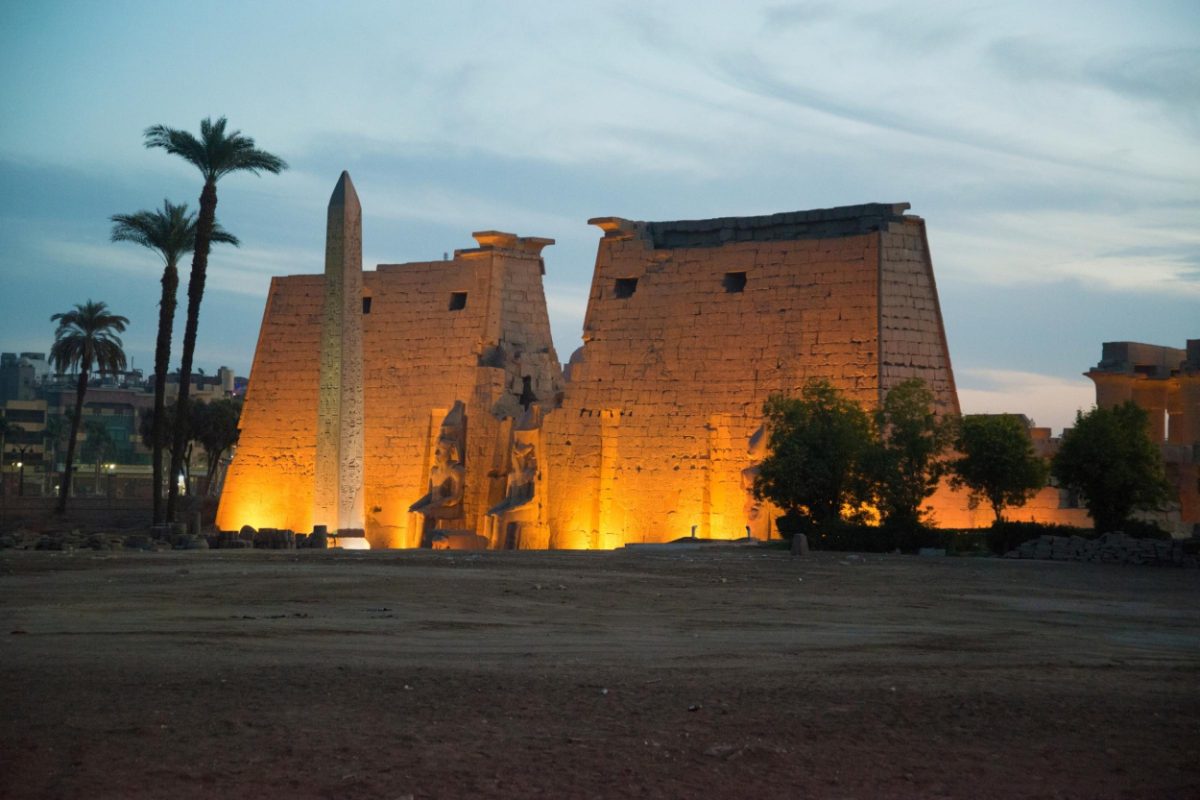
The Temple of Luxor is yet another impressive monument that once belonged to the New Kingdom Pharaohs who wanted to leave a lasting impression on the world. The Temple is one of many reasons why Luxor is called an open-air museum and why this city has captured the hearts and minds of visitors over the years.
Several Pharaohs including Ramses II and Amenophis III have left their mark on the walls and colonnades of this remarkable temple. The Avenue of the Sphinxes alone is worth the visit.
Luxor Temple was renowned for being the temple where the ancient kings of Egypt were coronated thus being glamorously built to fit such an important occasion. This happened during the Opet Festival where bread and beer were distributed and the Pharaoh underwent a ritual that transformed him into a god.
There are many attractions within the temple including the Great Court of Ramses II and the Colonnade of Amenhotep III. The Colonnade was supposed to become the new processional entrance during the rule of this Pharaoh but he died before its completion.
The temple looks especially beautiful at night. Make sure to stop by to admire the lit-up columns and illuminated sphinxes.
Opening Hours: 6 am – 9 pm
Location: Luxor Temple is located in Corniche Al Nil right across the road from the Nile River. This is considered the East Bank or city center and can be reached by a public ferry boat that docks close to the ticket gate. Ferry boat prices are 5 LE per person.
- Full day Luxor Highlights tour with Luxor Temple and Karnak Temple and the Valley of The Kings
- Explore Luxor Temple, Karnak Temple, Colossi of Memnon and more on a day tour
6. Luxor Museum
The museum boasts a large collection of New and Old Kingdom statues and artifacts under one roof. You will find temple remains that once belonged to Akhenaton who introduced a new god called Aton to the ancient Egyptians and built many temples in his honor.
Black granite statues of Amenhotep III are also on display in addition to wooden dolls called ushabti. These figurines were placed in the tombs of Pharaohs and were believed to play the role of servants for the dead kings in the afterlife.
The museum features pottery dishes and two royal mummies on display in a special dark wing. On your way to the exit, you will encounter a small hall showcasing stone sculptures that were unearthed from the Luxor Temple.
Admission Fee: 160 LE per person and 50 LE for the photo permit
Opening Hours: 9 am – 2 pm and 5 – 9 pm
Location: Corniche Al Nil – 20-minute walk from Luxor Temple – East Bank
7. Medinet Habu
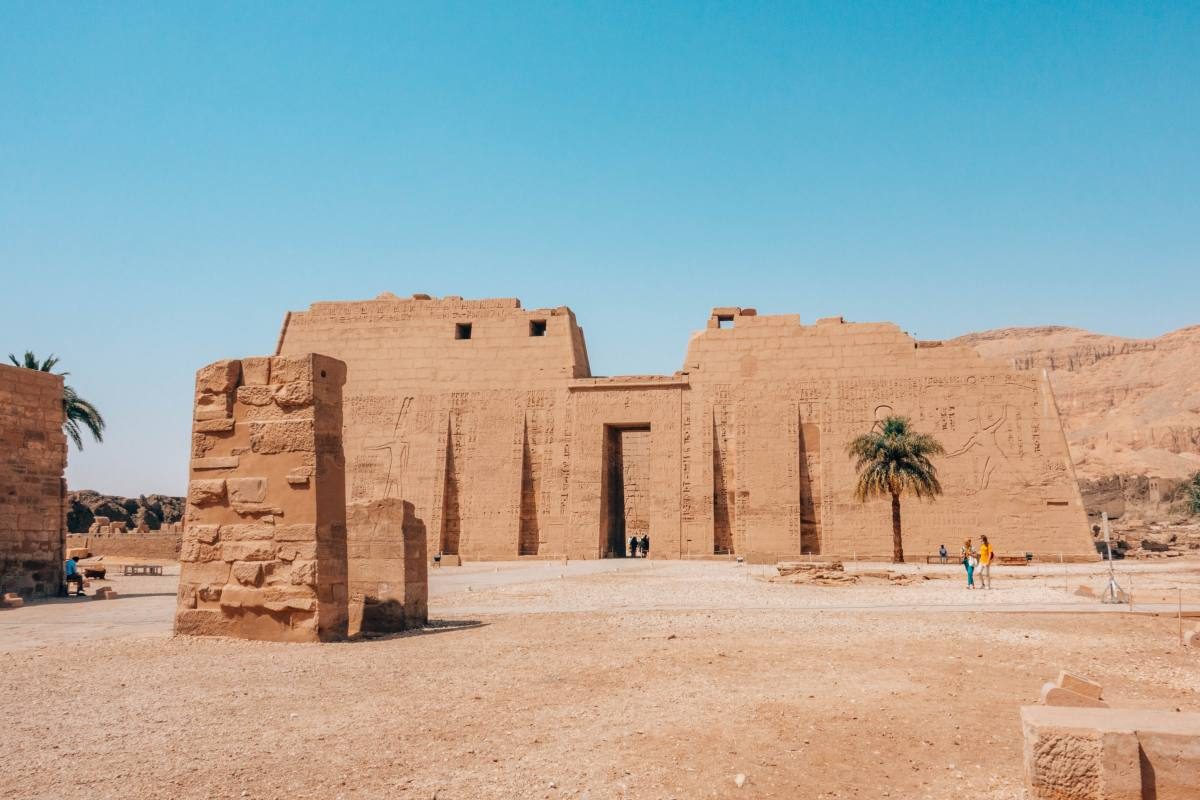
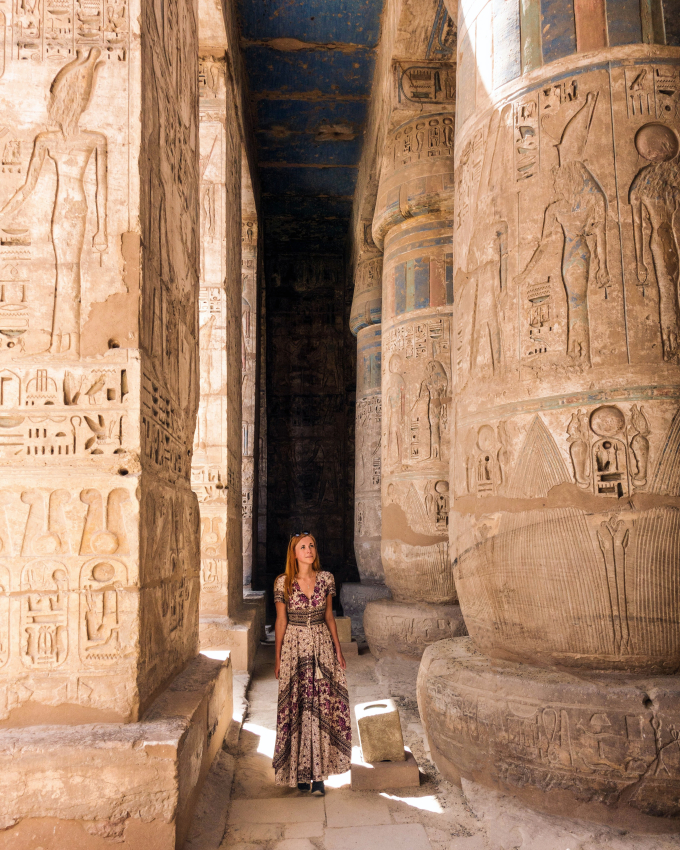
Medinet Habu was once a fully functioning administrative center and home to the Mortuary Temple of Ramses III who warded off enemies and took part in three great wars in order to protect his kingdom. Built out of sandstone, this ancient site witnessed many festivals in honor of the god Amun and shielded the locals from Libyan invasions during the 20th-century dynasty as well.
The site houses a sacred lake and a battle relief that is a must-see. This Ramses III relief is well preserved and can be found on the northern outer walls of Medinet Habu.
Admission Fee: 60 LE per adult
Opening Hours: 6 am – 5 pm
Location: Madinet Habu is located in the West Bank and is a 13-minute walk from the Colossi of Memnon. You can save time and rent a bike from Mohammed Setohe Bike Rental which provides well-serviced bikes at a reasonable price. You can rent a bike for the whole day for just 25 LE.
8. Karnak Temple Complex
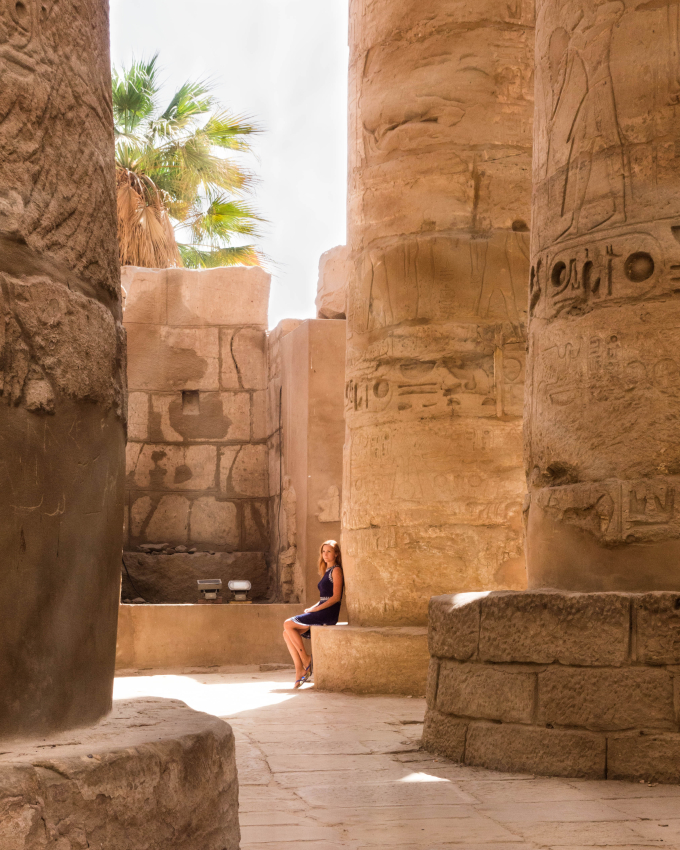
Surprisingly, the most visited spot in Egypt isn’t the pyramids. It’s Karnak in Luxor, considered the largest open-air museum in the world. The Temple Complex at Karnak is a sight to behold. It took more than 1300 years to build and expand the complex that witnessed many generations of builders and pharaohs who left behind an immortal legacy.
The temples were built in honor of three ancient Egyptian gods and cover an area of around 200 acres. The complex was once called ‘The Most Sacred of Places’, and for good reason. The three main temples of Amun, Mut, and Khonsu are great examples of New Kingdom architecture.
The Karnak complex was once sacked by Persian and Assyrian armies but it managed to survive wars and natural disasters. Early birds can soak up the history and spirit of the place before the flood of tour buses arrives.
While admissions to the complex cost 120 LE, the largest part of the complex – the precinct of Amun-Re is the only one open to the public.
Opening Hours: 6 am – 6 pm
Location: The complex is in the East Bank overlooking the Nile. It is a 20-minute walk or a short bike ride away from Luxor Museum.
9. Sound and Light Show at Karnak
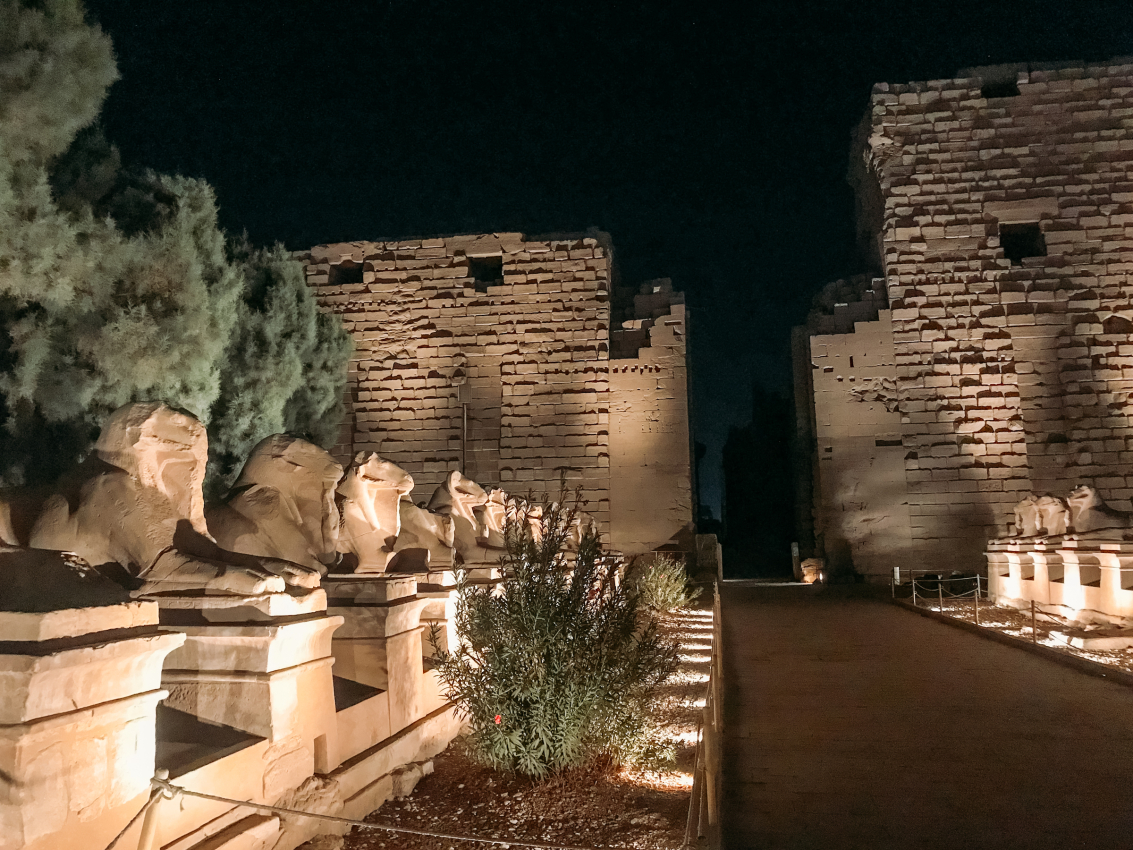
Your trip is not complete without experiencing the sound and light show at Karnak. The show is a storytelling of the history of Thebes before it became Luxor. It also doubles as a history lesson where visitors get to learn more about the Karnak Temple and the many pharaohs who made this land their home; the same pharaohs that went on to achieve great things and build breathtaking monuments.
Tickets to the sound and light show can be purchased from the main Karnak ticketing office. The hour-long sound and light show takes place three times a night. The first show starts at 7:30 pm, the second at 8:30 pm and the last show is at 9:30 pm.
Entrance costs about 300 LE or USD 23 per person. The show is offered in several languages including English, French and Chinese. You can check the timetable for languages and upcoming Ramadan timings using this link.
Location: The show is held at the Karnak Temple Complex.
10. Ride in A Felucca
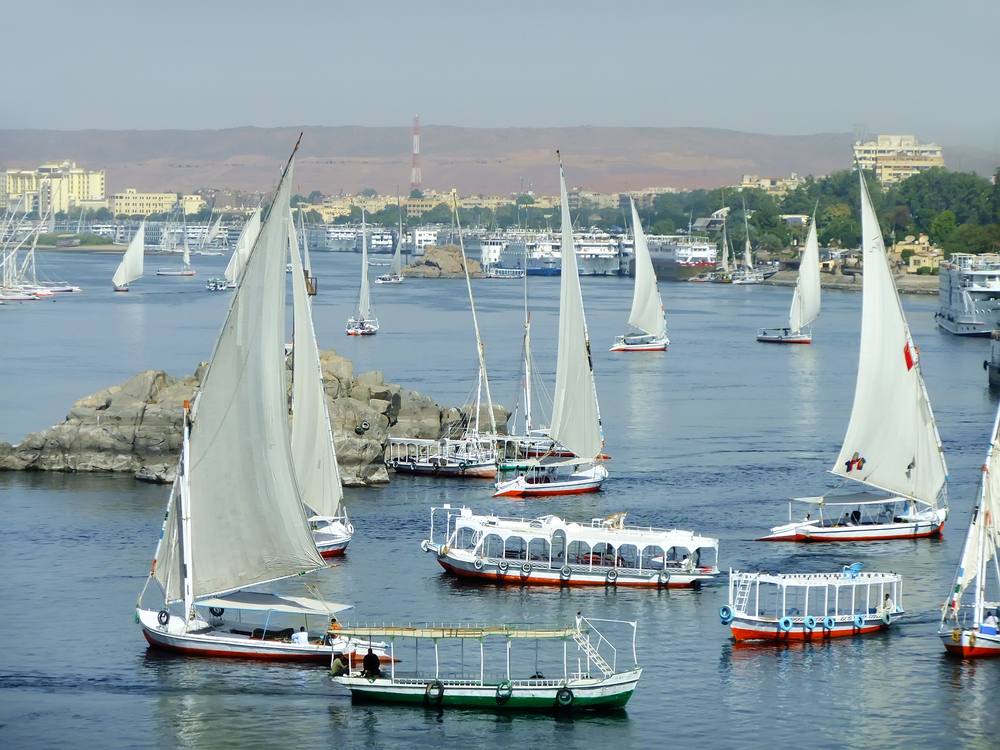
The most memorable cruise you can take is down the Nile River on a Felucca. A felucca is a traditional wooden sailing boat with one or two lateen sails. It was also an active means of transport in Egypt for a long time and it still remains popular.
One can also cruise on a proper sailing boat too, and often large ships offer accommodations on board. But trust me – felucca is the best choice. You can experience this by booking your felucca ride.
11. Horse Carriage Tour Around Luxor
Explore Luxor the old-fashioned way and book a carriage ride that will take you down the historic center where you can feast your eyes on the illuminated temples and the moonlit Nile River. The carriage can drop you off at the open-air market where you can shop for souvenirs and haggle with sellers for handmade items. You can book the evening carriage ride through your hotel or online.
Or take a horse carriage ride through the city during the day and visit one of the oldest running mosques, the Mosque of Abu Haggag, see many Coptic Christian churches, pass through a historic village and a bustling souq.
12. Fly a Hot Air Balloon
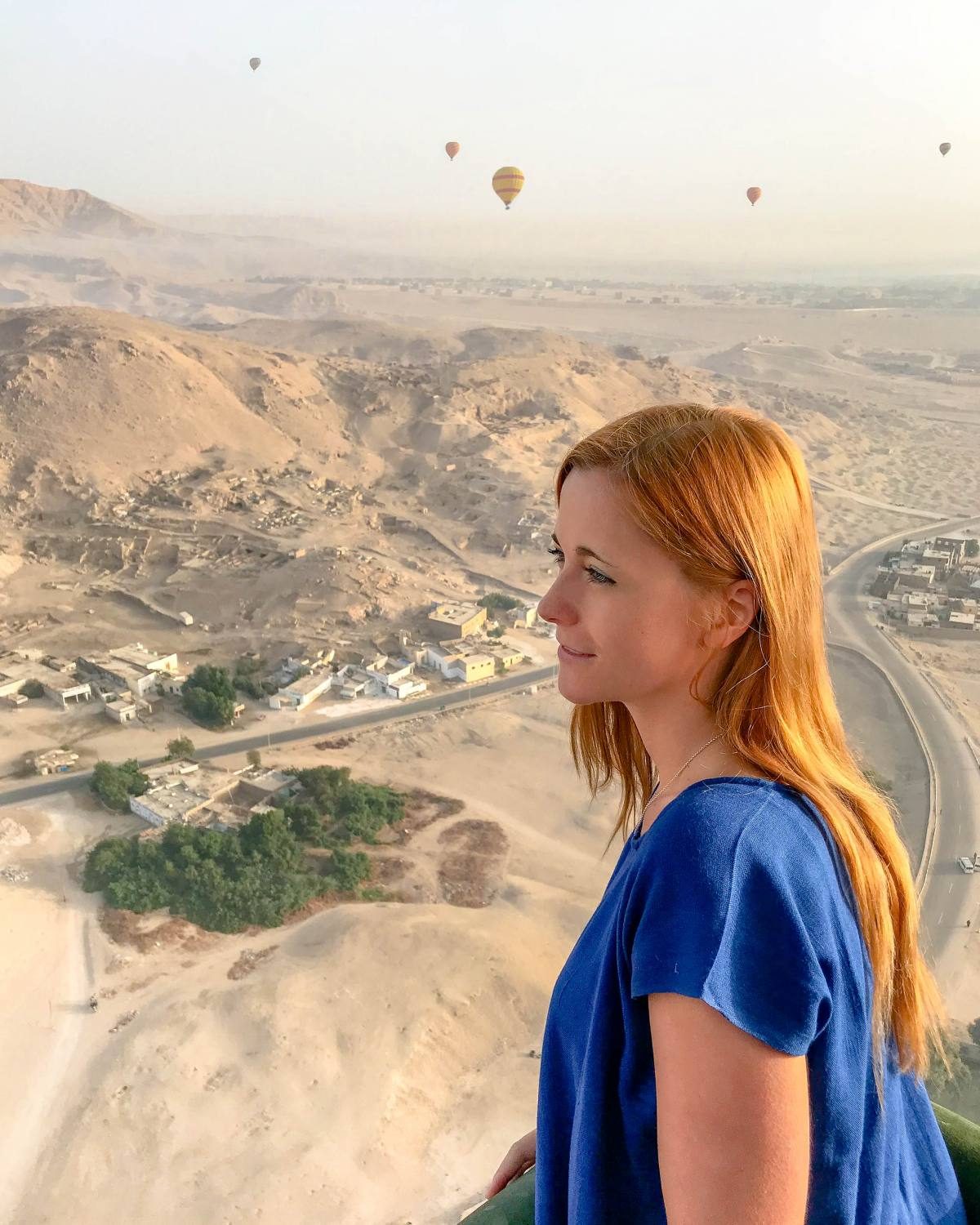
See Luxor from the air! Hot air balloons are extremely popular in Luxor, mostly because unlike in other spots in the world they’re very affordable.
Most balloons go up around 5 am, so prepare for an early morning. If you catch a good day without too much dust floating around you can see the temples and Valley of the Kings from the air.
Pre-booking a tour is a must because they might get full!
13. Go Outside Luxor: Temple of Dendera and Temple of Abydos
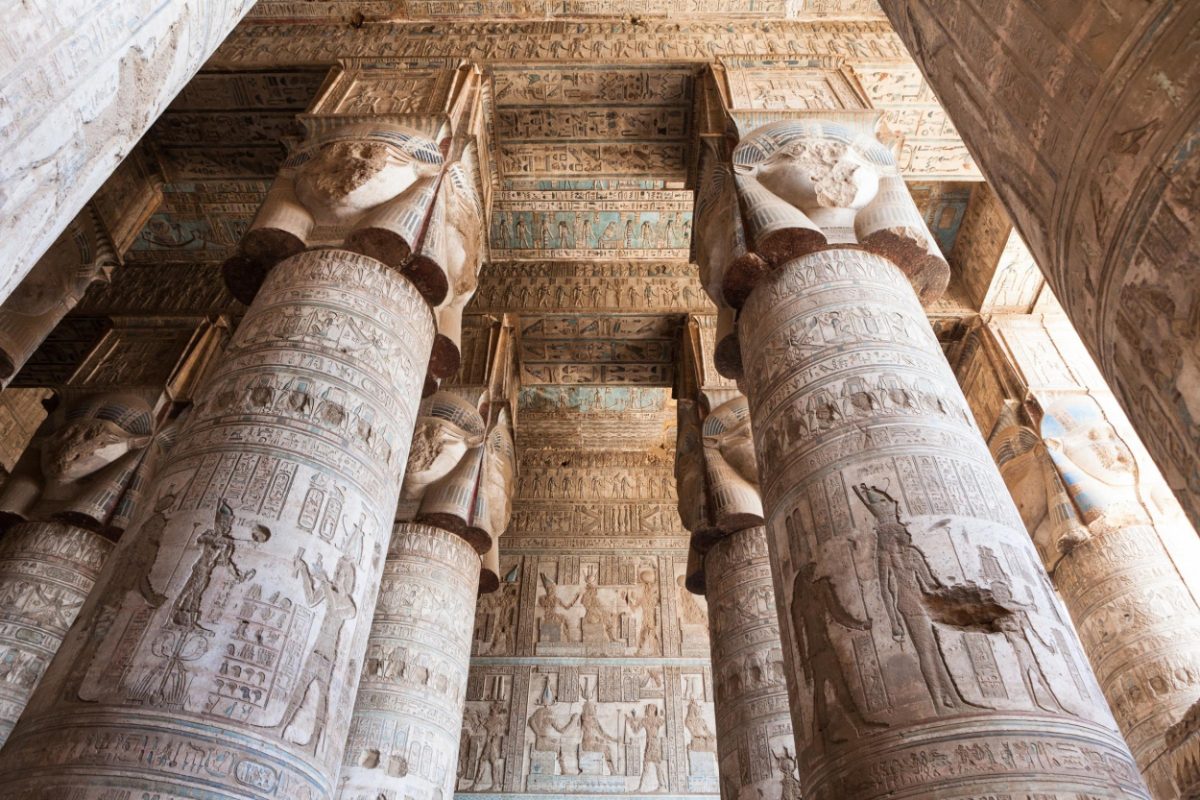
While Luxor is home to many historic sites, there is nothing as beautiful as the Temple of Hathor in Dendera. Located about 60 km North of Luxor, this ancient temple is built in the Greco-Roman style. See the massive reliefs of the Roman Emperor Trajan paying homage to the Ancient Egyptian goddess Hathor. See the ceiling with the exquisite Dendera Zodiac and other signs of the zodiac.
Then head over to the nearby temple of Abydos which was once considered one of the holiest places on earth. Learn more about the Osiris cult while your guide tells you secrets about the gateway to the underworld.
Other Fun Things To Do In Luxor, Egypt
How To Get Around Luxor
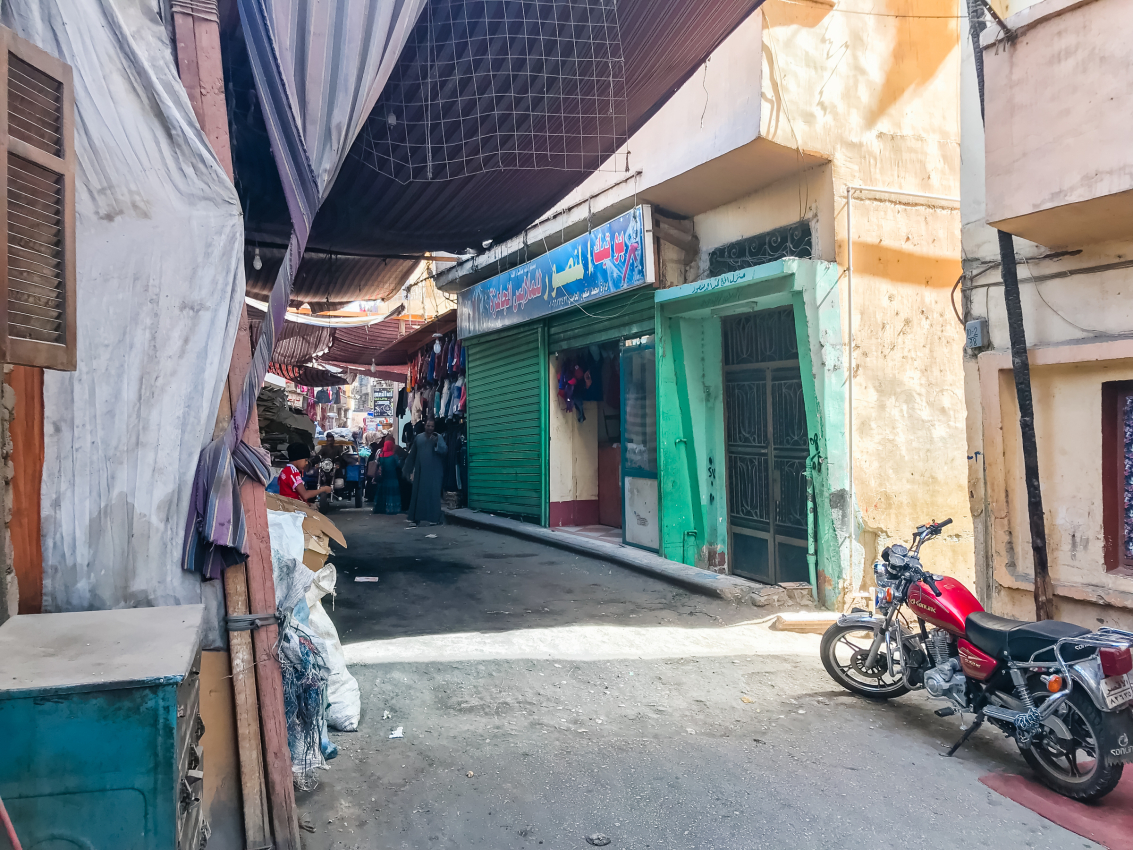
The easiest way to travel around Luxor is by renting an affordable bike or private taxis. However, if you’re good at negotiation, you can travel around the city by taxi or caleche (horse-carriages).
Minibusses work like local taxis but take up to 10 passengers. They’re easy to flag down and cheap, but you can’t always find them empty.
If traveling to locations that are close to your hotel or close to each other, you can also walk from place to place. Just be wary of the street vendors.
Where To Stay In Luxor, Egypt
Luxury Hotels in Luxor
Sofitel Winter Palace Luxor – A stunning example of Victorian architecture and remarkable grounds close to the Luxor Temple.
Steigenberger Resort Achti – An 8-acre luxury resort with lush tropical gardens set on the banks of the Nile River.
Hilton Luxor Resort & Spa – Featuring infinity pools on the edge of the Nile, the Hilton offers lovely views of the Valley of the Kings.
Mid-range Hotels in Luxor
Iberotel Luxor – Featuring a heated pool floating on the Nile, this 4-star hotel overlooks the Theben Hills and is a short walk from Luxor Temple.
Aracan Eatabe Luxor Hotel – Close to Luxor Museum and Luxor Temple, this hotel offers breathtaking views of the Nile and Hatshepsut temple on the West Bank.
Al Moudira Hotel – Looking like an oasis in the desert with oriental decor, and located at the gateway to Luxor, Al Moudira Hotel is the only palace located on the western bank of the Nile.
Budget-Friendly Hotels in Luxor
El Mesala Hotel – Offering excellent views of Luxor Temple, this waterfront hotel has a rooftop restaurant serving Egyptian and European fare. The rooms with balconies offer better views.
New Memnon Hotel – Located in the Theban Necropolis, this hotel is just 1148 feet away from the Colossi of Memnon and less than 2 kms from the Valley of the Kings and Queens. You’ll love the traditionally decorated rooms and views of hot air balloons.
Thebes Hotel – A 12-minute walk from the Colossi of Memnon, this pocket-friendly hotel has amazing views of Hatshepsut Temple. The rooftop terrace is perfect for enjoying Egyptian fare while looking out at the Valley of the Kings.
So that’s our list of top things to do in Luxor, Egypt, and places to stay in Luxor for the best local experience. Comment and let us know if you have any questions!