
Best Things to Do in Seville, Spain

Seville has a rich, colorful culture, a variety of exciting things to do, and a blend of architectural designs similar to those bestowed on adjacent Málaga, thanks to its long and rich history. The undeniable appeal of Spanish culture inside a stunning city is present in all areas of Seville.
Seville Spain is the best place to visit if you’re looking to get into Spain’s history and culture. With many museums and artworks, as well as architecture, it’s no wonder it catches the eye of those who have a heart for art.
See how Christian opulence is lavishly displayed in palaces that cannot resist the draw of Islamic architecture.
Discover Spanish masters’ extravagant works of art that decorate the spaces where they are displayed. Explore cobblestone roads, stroll through green parks, and sip sunset cocktails in remote plazas.
1. Plaza de Espana
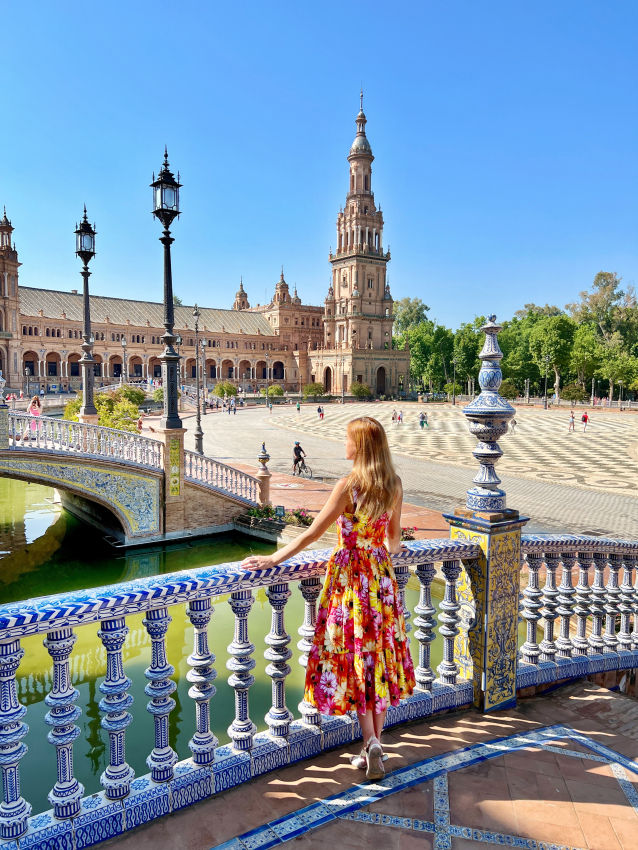
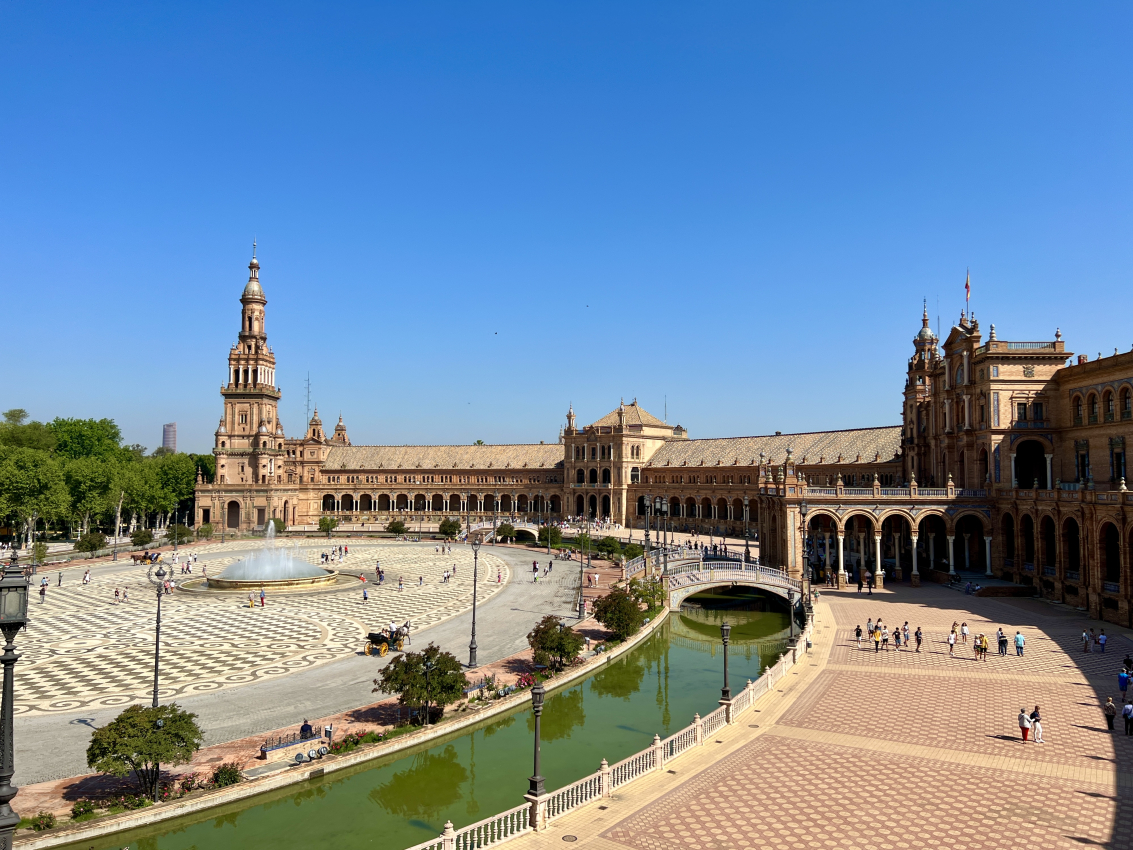
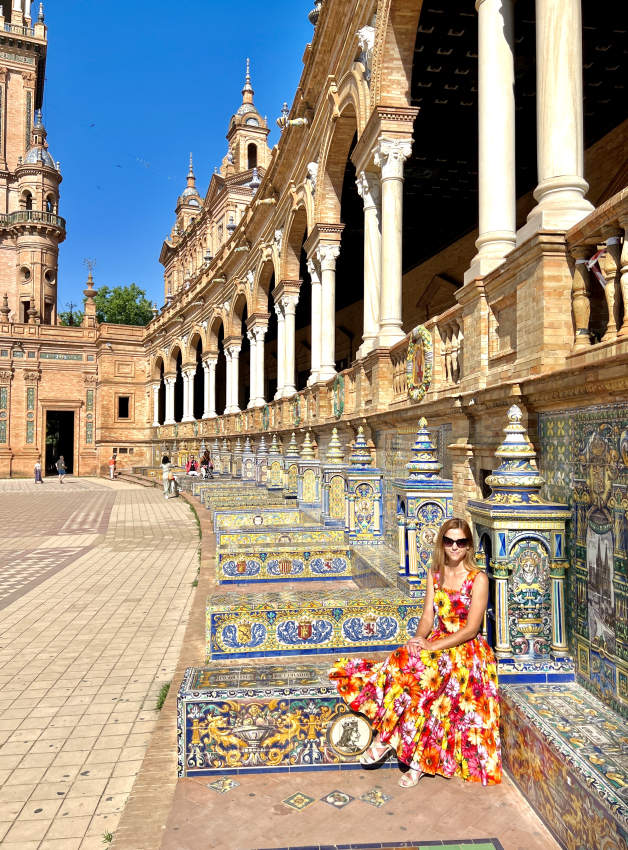
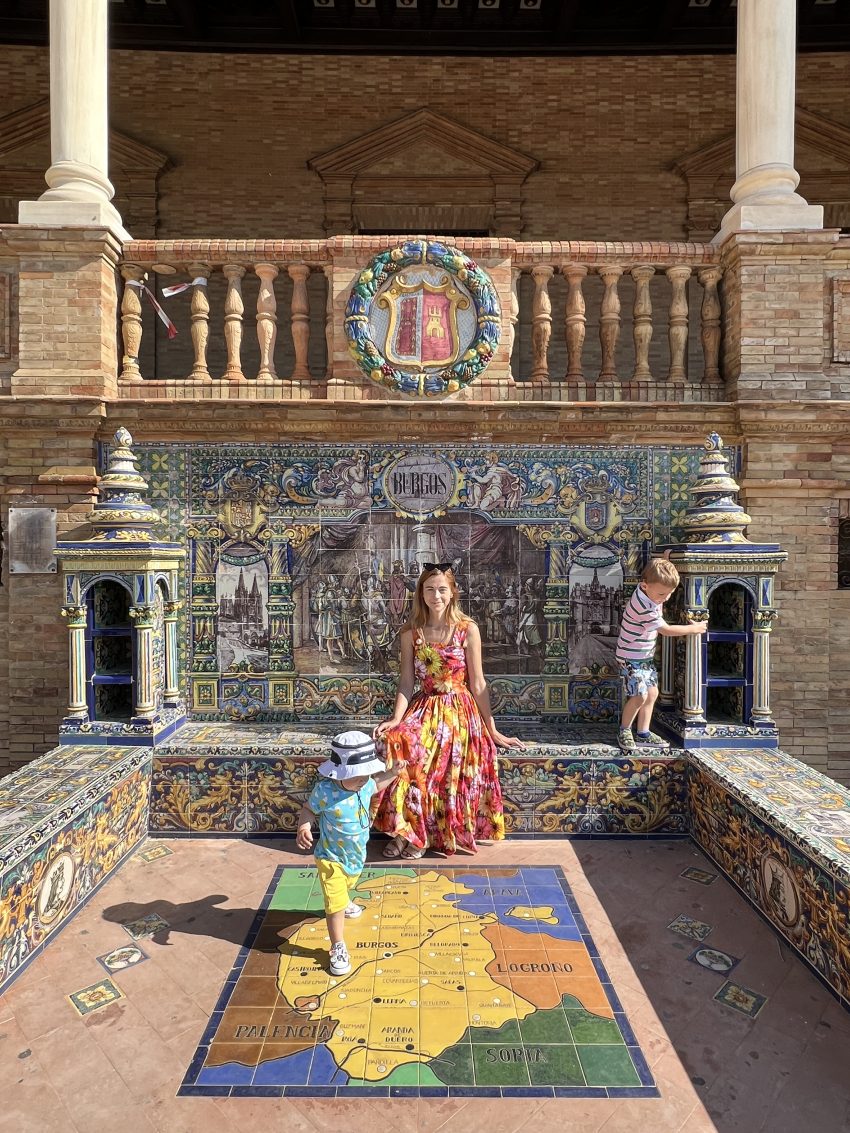
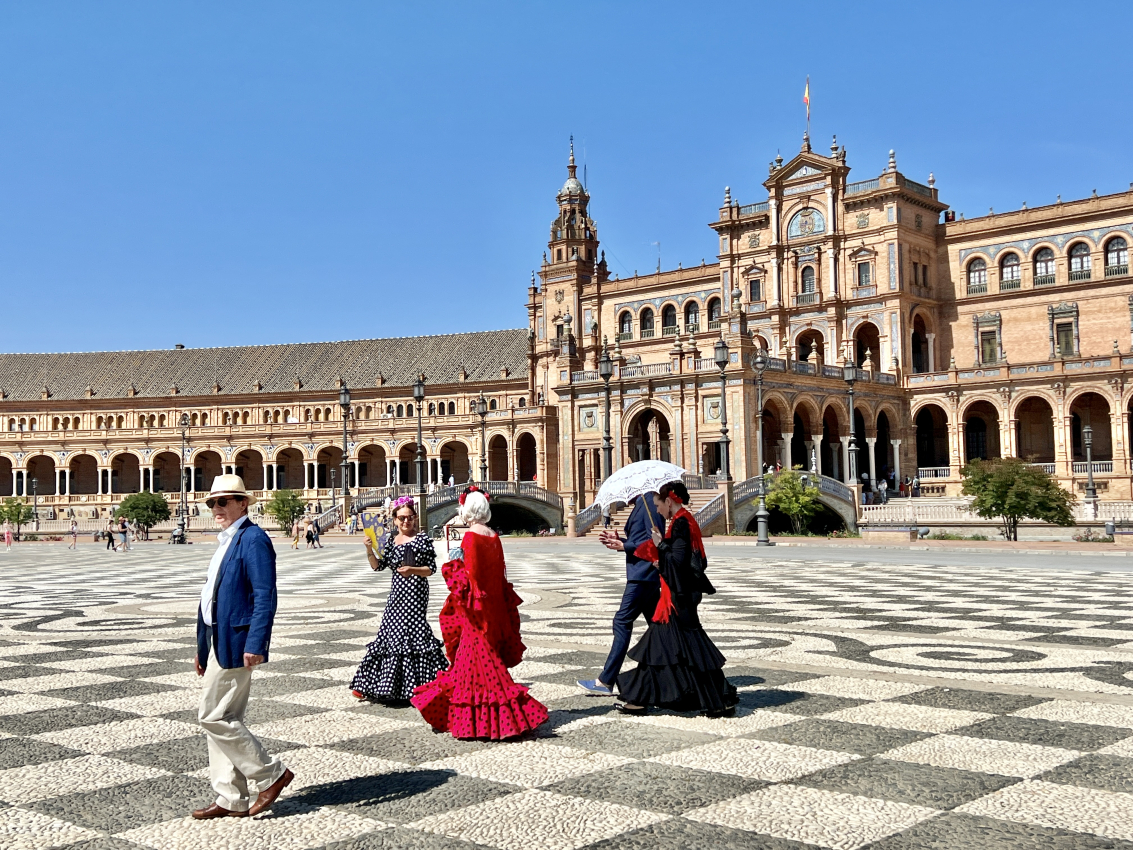
Sure, Plaza de España is a beautiful square located in the heart of Seville, Spain. It was built in 1928 for the Ibero-American Exposition of 1929, and it has since become one of the city’s most popular tourist attractions.
One of the most striking features of Plaza de España is the colorful ceramic tiles that adorn the buildings and bridges. These tiles depict various scenes from Spanish history and are a tribute to the country’s cultural heritage. Each of Spain’s provinces is also represented by a decorative tile bench, making the plaza a kind of open-air museum of Spanish culture.
The square is surrounded by lush gardens and tree-lined walkways that make it a popular spot for strolling and relaxation. Visitors can also rent a rowboat and paddle around the moat, taking in the sights and sounds of the square from the water.
If you’d rather just relax, take a sight-seeing cruise along the Guadalquivir River. Some boat tours also include delicious Andalusian tapas and beer or sangria.
2. Royal Alcazar de Sevilla
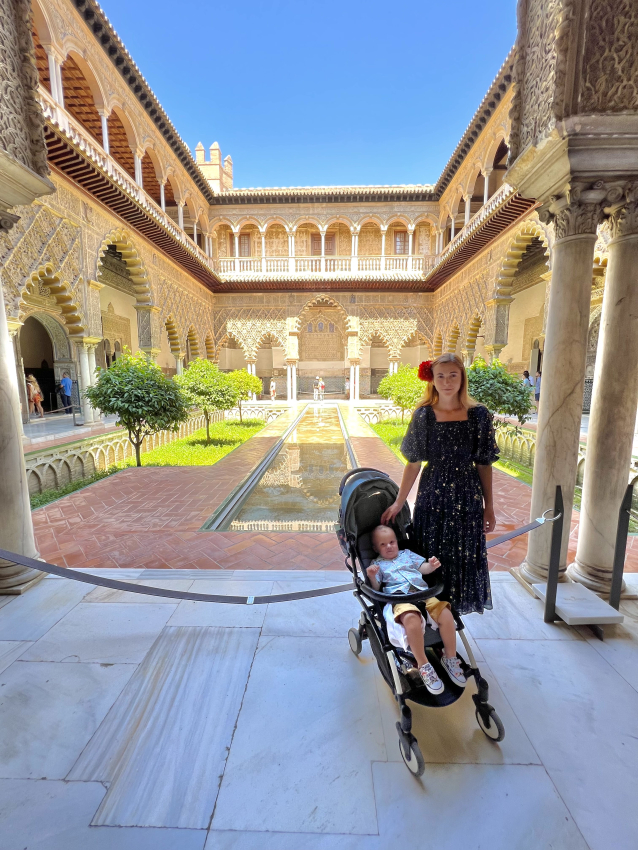
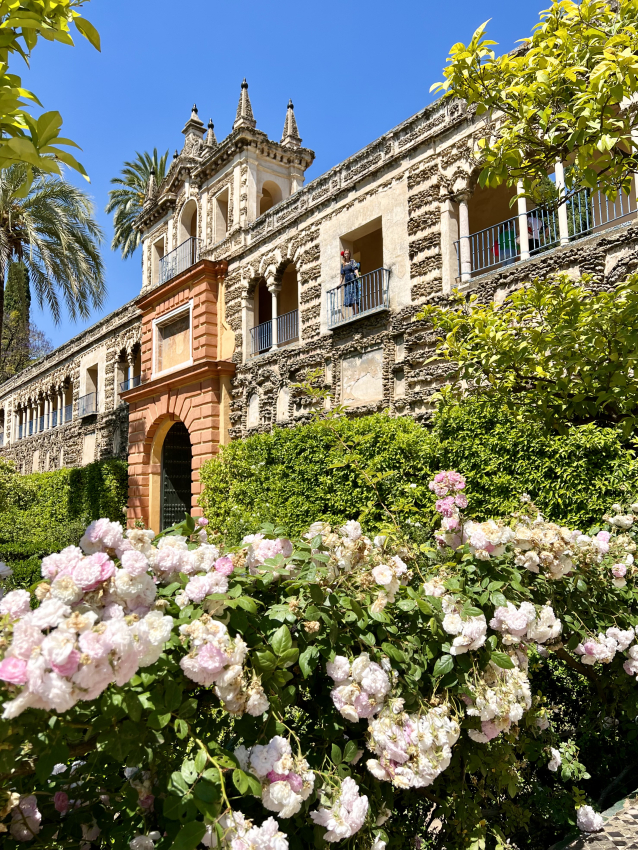
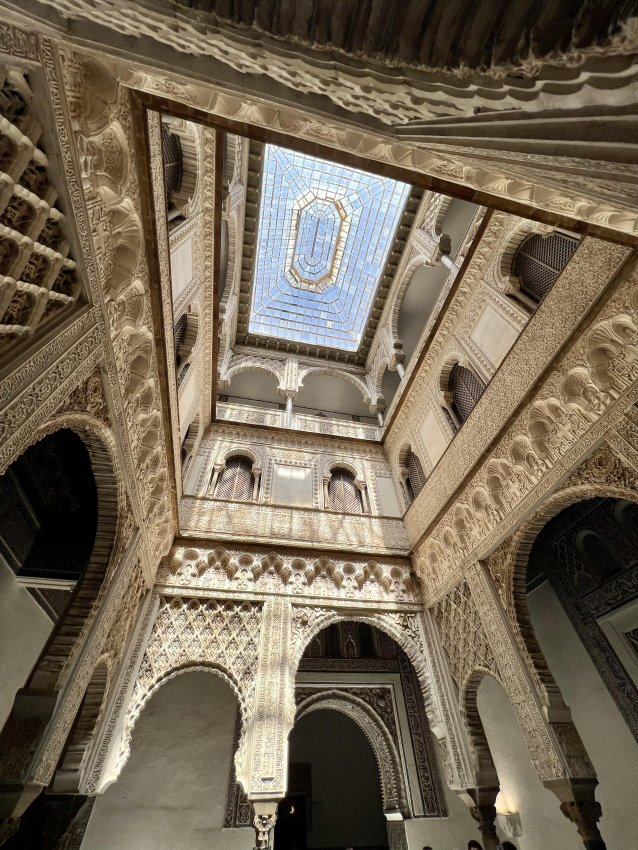
Royal Alcazar is one of the city’s most popular tourist attractions and is known for its exquisite architecture, beautiful gardens, and rich history.
It was originally constructed in the 10th century as a fortress for the ruling Muslim kings of the time. Over the centuries, it was expanded and renovated by successive rulers, including Christian kings who took control of the palace after the Reconquista in 1248. The result is a unique blend of architectural styles, with influences from Islamic, Gothic, Renaissance, and Baroque traditions.
Visitors can explore the many rooms and halls of the palace, each of which is decorated with beautiful frescoes, tapestries, and other works of art.
If you’re visiting with kids you can bring a stroller and enjoy the gardens during a quiet afternoon. The gardens cover over 7 hectares and are divided into several different sections, each with its own unique design and laws, water features and statues.
I highly recommend pre-booking tickets. We didn’t and we were stuck in a separate line for almost an hour. Skip-the-line tickets will save you a lot of time.
3. Museo de Bellas Artes
The magnificent Museum of Fine Arts in Seville is located inside the opulent Convento de la Merced Calzada from the 17th century. After the Prado in Madrid, this museum is thought to contain Spain’s best collection of art pieces. The series features elements of art from the Gothic era to the twentieth century.
Particularly remarkable is the depiction of the works of Spanish painters from the 17th century. Masterworks by well-known Spanish artists such as Diego Velázquez, El Greco, Alonso Cano, and Francisco Pacheco will be displayed for visitors.
The museum explicitly emphasizes Bartolomé Esteban Murillo’s masterpieces and pieces by the 17th-century Seville school. Francisco de Zurbarán’s religious paintings are equally noteworthy. Book a skip-the-line ticket for easy access.
4. Real Maestranza de Caballería de Sevilla
One of Spain’s best and largest bullrings is the Real Maestranza de Caballera de Sevilla, which seats over 12,500 spectators. The Royal Bullring, a prominent feature of Seville, was constructed in 1761.
The bullring’s distinct Baroque architecture features an oval-shaped ring that sets it apart from other Spanish bullrings, and its elegant, arcaded seating offers much-appreciated shade on hot days. For members of the Spanish royal family, a unique box called the Palco del Principe is reserved inside the bullring.
The Royal Bullring is a museum showcasing various traditional matador attire in addition to images and artwork pertaining to the dramatic sport of bullfighting. Highlights include multiple works by Francisco de Goya and a painting by Eugenio Lucas Velázquez titled Cogida de Muerte de Pepe Hillo. An insight into the intriguing history of bullfighting can be gained by visiting the museum.
The Seville bullfighting tradition originates in a medieval chivalric practice in which the nobles trained on horseback and the use of weapons to be ready for battle.
The Real Cuerpo de Maestranza de Caballería de Sevilla (Royal Corps of Cavalry) was established in 1670 under King Carlos II to help defend the Crown.
From the museum, visitors can continue their journey by making their way to the Capilla de Los Toreros via the Patio de Caballos (Courtyard of the Horses). Before a bout, matadors pray in this chapel and make votive offerings to the altarpiece of the Virgen del Rosario.
5. Ayuntamiento de Sevilla
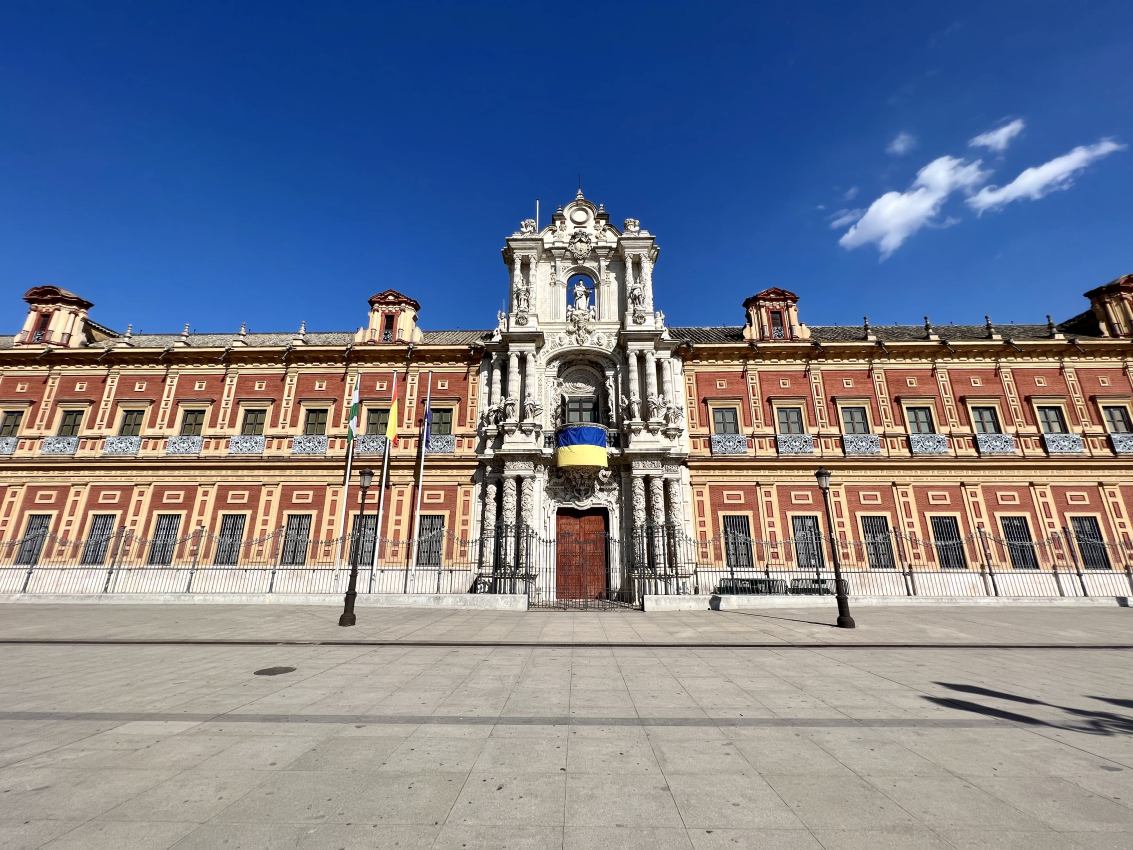
Diego de Riao created this magnificent town hall in the Plateresque architectural style in the fifteenth century. The finely carved reliefs on the southern front show characters from myths and historical tales as well as symbols for the legendary city founders Hercules and Caesar.
The main front of the building, which has a Neoclassical design and overlooks Plaza Nueva, was refurbished in the 19th century. A short archway connects the nearby Franciscan monastery and the town hall.
In order to see the interior, tourists must make the necessary reservations in advance. This area is home to several significant artistic works, including a picture of the town’s patron saints, Rufina and Justa.
6. Archivo General de Indias
The 16th-century Casa Lonja de Mercaderes (merchants’ exchange building), located across from the Alcázar, is home to the Archivo General de Indias, a collection of records from Spain’s colonial era in the New World.
They house over forty-three thousand books. It has been a long commitment to digitize the library to be accessible online. Researchers and scholars are welcome to request access to specific documents and materials for their studies and the general public is welcome to visit.
During the reign of Carlos III, the Spanish government established the General Archive of the Indies for the management of colonial possessions. The General Archive or Archive of the Indies not only preserves historical documents but also showcases a small number of them and hosts exhibits about Spain’s Age of Exploration.
7. Metropol Parasol
Visit the Metropol Parasol promenade and lookout for breathtaking views of the Seville cityscape. “Las Setas” (“The Mushrooms”) is the name given to this unusual building designed by German architect Jürgen Mayer and completed in 2011. Its shape resembles six sizable mushrooms.
An archaeological site called the Antiquarium is located in the building’s basement. Ruins from the Roman, Visigoth and Moorish periods are accessible to viewers.
The promenade and viewpoint are located on the top of the building, 26 meters above the ground, and they offer a stunning view of the city’s landmarks and rooftops. A tapas restaurant can be found below the walkway.
It’s best to book skip-the-line tickets to visit the largest wooden structure in the world.
8. Catedral de Sevilla
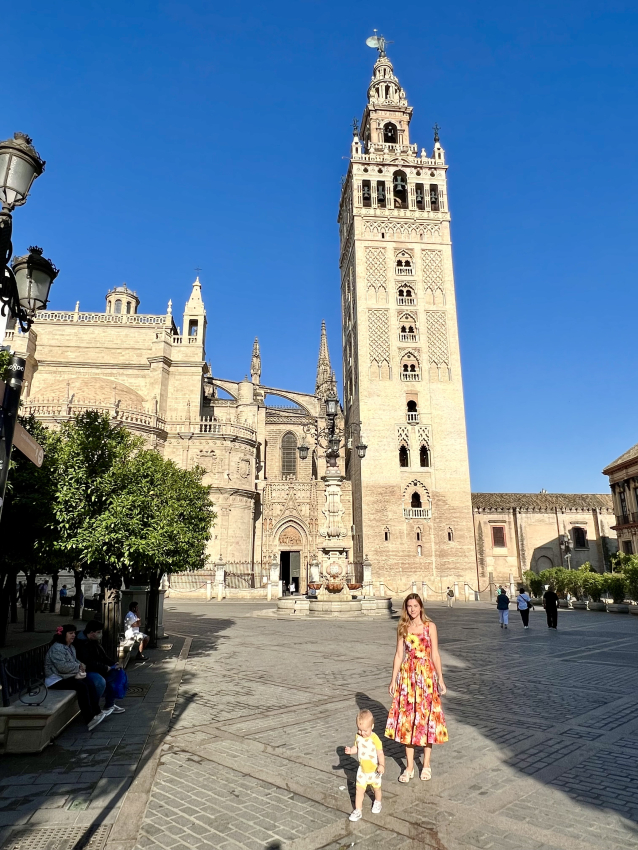
Visitors leave with an unforgettable impression of the Catedral de Sevilla. The Cathedral is unparalleled in its astounding scale and profusion of art treasures as the largest Gothic Cathedral in the world. This magnificent place of worship was built between 1402 and 1506 upon this town’s main mosque and is now a UNESCO World Heritage Site.
La Giralda, the Cathedral’s bell tower, was formerly the mosque’s minaret, which was constructed in the 12th century by the Almohad dynasty Moorish kings. The 93-meter building still serves as Seville’s logo.
You’ll be taken aback by the Cathedral’s enormous dimensions as soon as they enter. The interior’s five aisles measure 117 meters long by 76 meters wide and reach 40 meters. The finest Gothic interior in Spain is this enormous room.
The magnificent retablo in the Capilla Mayor (Main Chapel) is regarded as a pinnacle of Gothic woodcarving. Forty-five images from the lives of Christ and the Virgin are arranged around a representation of the Virgen de la Sede in the center.
The Capilla Real is located behind the Capilla Mayor (Royal Chapel). These royal tombs are housed in a domed Renaissance chapel constructed between 1551 and 1575.
The Sacristan Mayor is a stunning room from the 16th century that houses a colossal candelabrum and crucifix by Pieter de Kempeneer. The priceless gem-encrusted Crown of the Virgen de Los Reyes is on display at the Treasury of the Sacristan Mayor.
Even if you visit this impressive Spanish monument on your own, it’s important to avoid waiting in queues for hours by booking skip-the-line tickets.
9. Iglesia Colegial del Divino Salvador
The Iglesia Colegial del Divino Salvador is a lovely Baroque church at a short distance from the Cathedral. On the site where Seville’s former mosque, La Mezquita Aljama de Ibn Adabbás, originally stood, construction was underway in the late 17th century, and a lot has been added since then.
The Mannerist movement influences the elaborate facade, which glows pink in the waning afternoon sun. The enormous, gilded interior is complete with exquisite artwork and Sevillian Baroque embellishments. The display is equally magnificent and astonishingly grandiose.
Sacred Christ of Love by Juan de Mesa and Jesus of the Passion by Juan Martnez Montaés are magnificent altarpieces that adorn the church. The grand dome, the organ from the 18th century, and the sacristy that dates from the 16th century are additions to the experience at Iglesia El Salvador.
To avoid the lengthy lineups at the Cathedral, you can purchase a combined ticket for the Iglesia Colegial del Salvador and the Catedral de Sevilla. This deal would be a great option as a starting location for activities in the area.
10. Museo del Baile Flamenco (Museum of Flamenco Dance)
Flamenco, a colorful art form with Gypsy roots, is well-known in Seville. Flamenco is a method of singing and dancing, but it is most significantly a form of soul expression. The best flamenco dancers share technical mastery and a unique ability to manipulate emotions.
The Museo del Baile Flamenco honors the elegance of flamenco with displays of the genre’s dance, singing, and guitar elements. This cutting-edge museum offers informative exhibits, including flamenco costumes and inventive visual presentations.
Additionally, there is a Flamenco School at the museum, and there are professional Flamenco performances every day all year long. At 7 o’clock, one-hour-long performances get underway at the Flamenco Museum. On Calle Céspedes, La Carbonera hosts flamenco performances virtually every night.
Other locations for flamenco performances include La Casa de la Memoria Flamenco, where performances take place in the courtyard of a 15th-century palace, Tablao Flamenco Los Gallos, one of Seville’s oldest tablaos, and El Palacio Andaluz, a traditional small venue theater close to the Basilica de la Esperanza Macarena.
11. Barrio de Triana
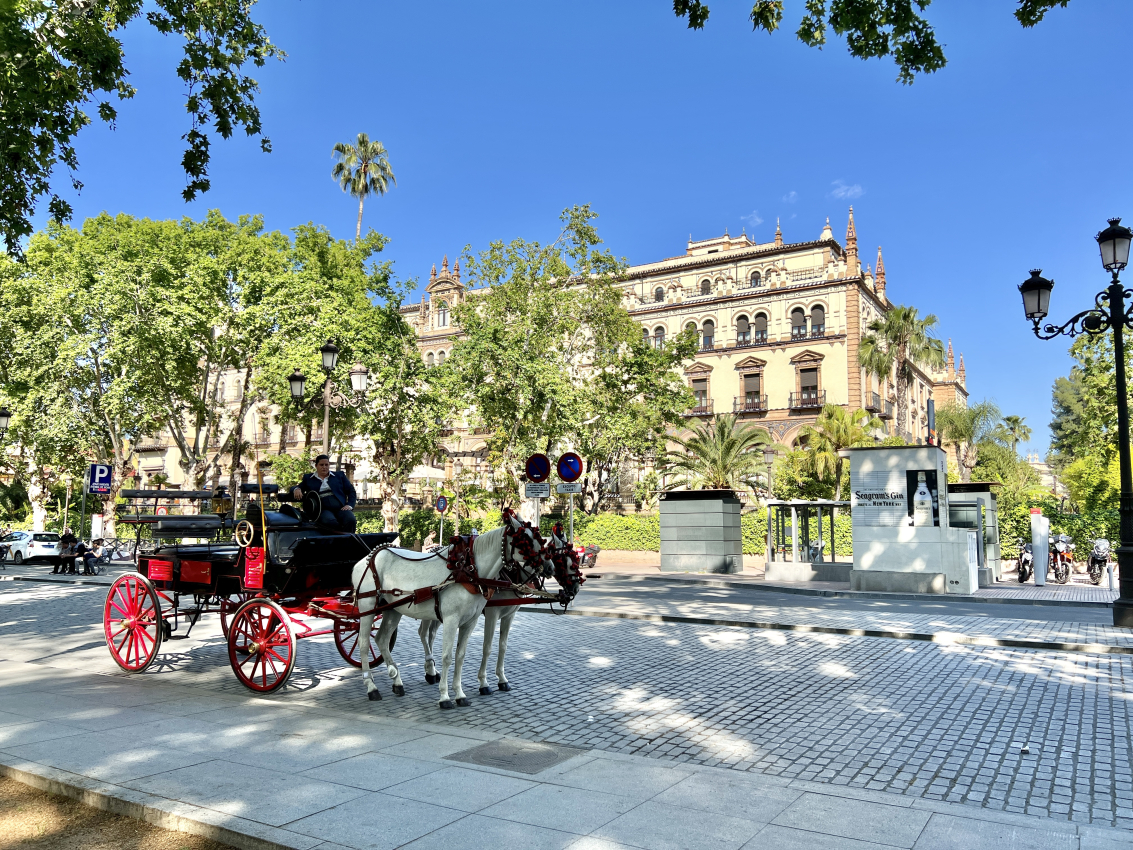
Seville’s historic district has a unique personality and individuality all its own. The neighborhood feels on a different planet from Seville’s top tourist sites, even though it is right across the river. The Barrio de Triana is a network of narrow cobblestone alleys and passageways leading to evocative squares, much like the Barrio de Santa Cruz.
The Barrio de Triana stands out due to its history as a historic pottery district and the presence of a Gypsy populace. The residents of this area have been producing genuine Andalusian pottery for generations using clay found on the Guadalquivir River’s banks.
The Barrio de Triana’s ceramic workshops and shops, primarily situated on the Calles Callao, Antillano Campos, and Alfarera, are particularly well-known for their exquisite azulejos, or glazed ceramic tiles decorated with vibrant geometric patterns that are a byproduct of Andalusia’s Moorish aesthetic.
In addition to this, this district’s shops also carry lovely decorative pottery plates, pitchers, cups, serving utensils, and other home goods, you can also learn to make your own ceramic tiles. Visitors will be hungry after perusing the quaint stores and will be ready for tapas at one of the riverbank restaurants in the area, many of which offer outdoor terraces with views of Seville’s landmarks.
12. Museo Arqueológico de Sevilla
The Seville Archaeological Museum is housed in a Neo-Renaissance pavilion constructed for the 1929 Ibero-American Exposition and is situated in the Parque de Mara Luisa.
The collection starts with artifacts from the early Paleolithic era, moves on to Greek, Phoenician, and Roman antiquities, and concludes with Medieval Moorish and Mudéjar pieces.
Artifacts found at the Itálica archaeological site in the province of Seville are on show on the ground floor. A statue of Diana and gold jewelry are among the highlights.
The Tartessian Carambolo Treasure, on exhibit in a dedicated area on the first floor, is another unique item. A shrine honoring Phoenician deities may be found in this room, along with a replica of the gold treasure.
The Museum is currently being renovated and closed till 2026, but you can visit the birthplace of Emperor Hadrian, which is a Roman archaeological site a short distance from Seville.
14. Attend Feria de Sevilla (seasonal)
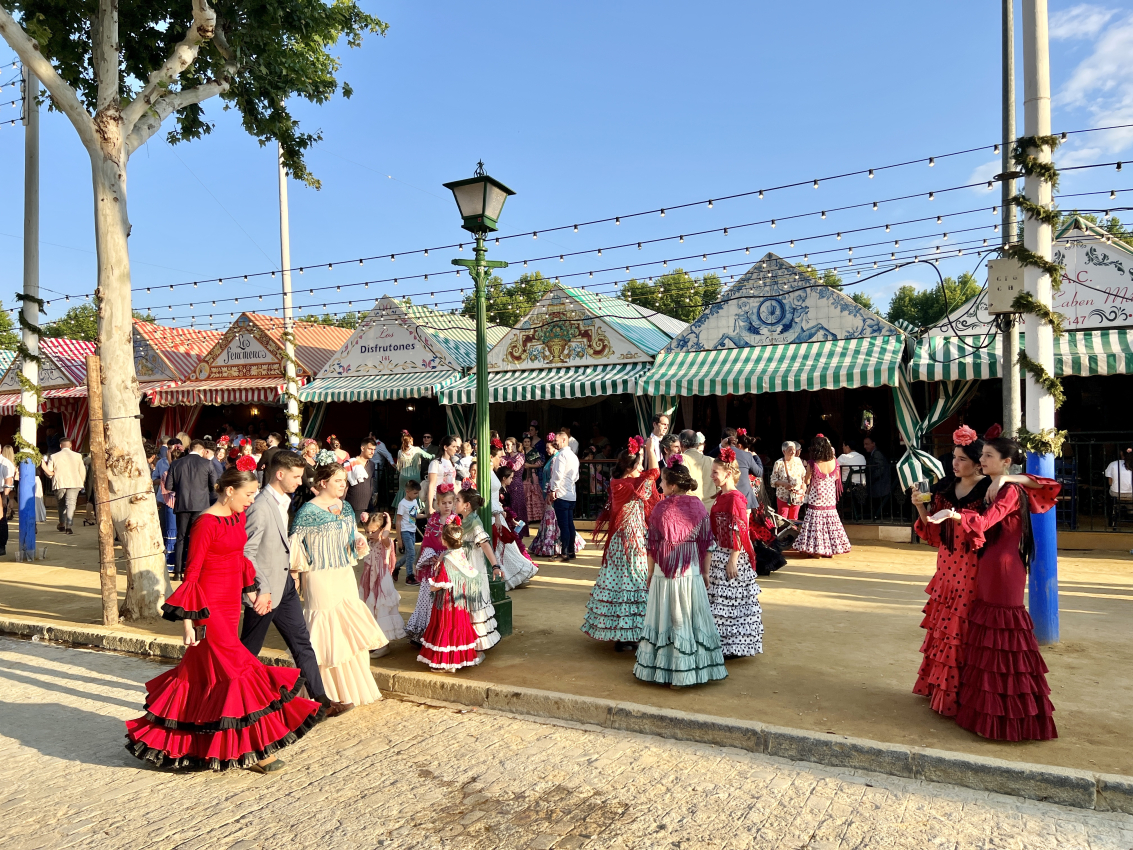
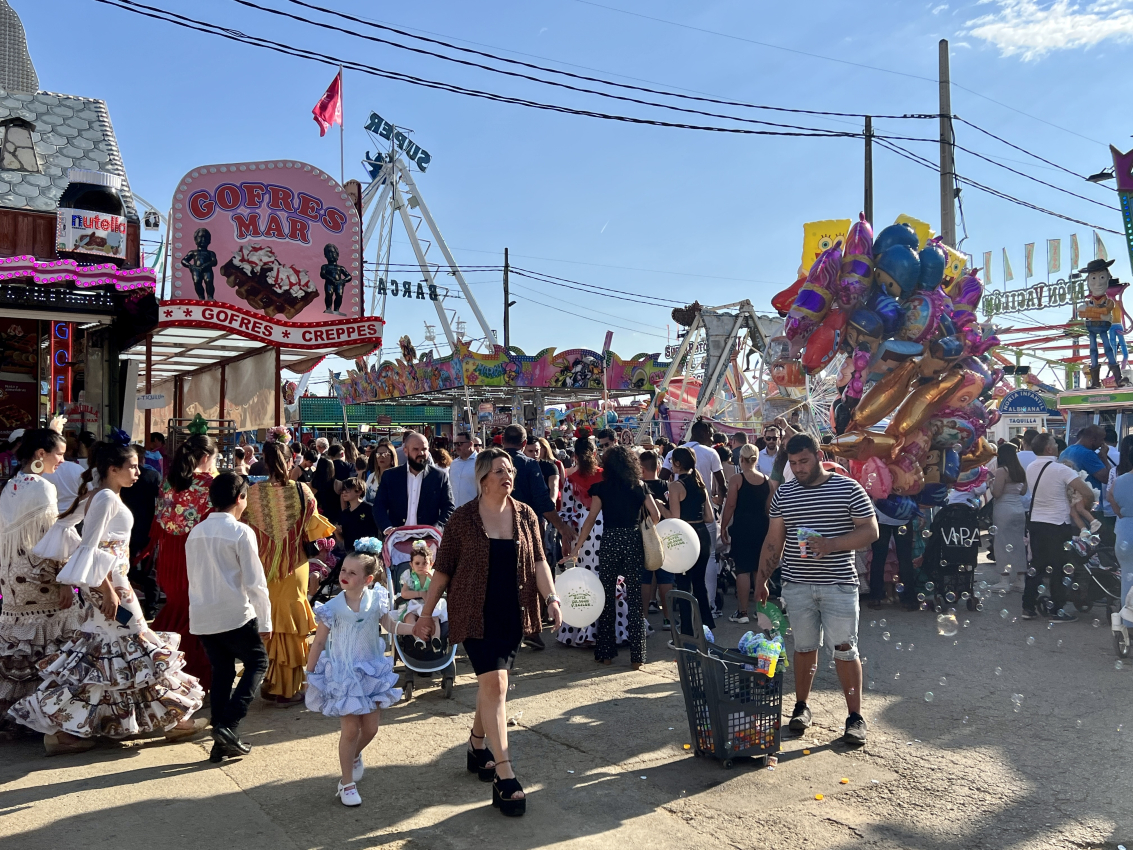
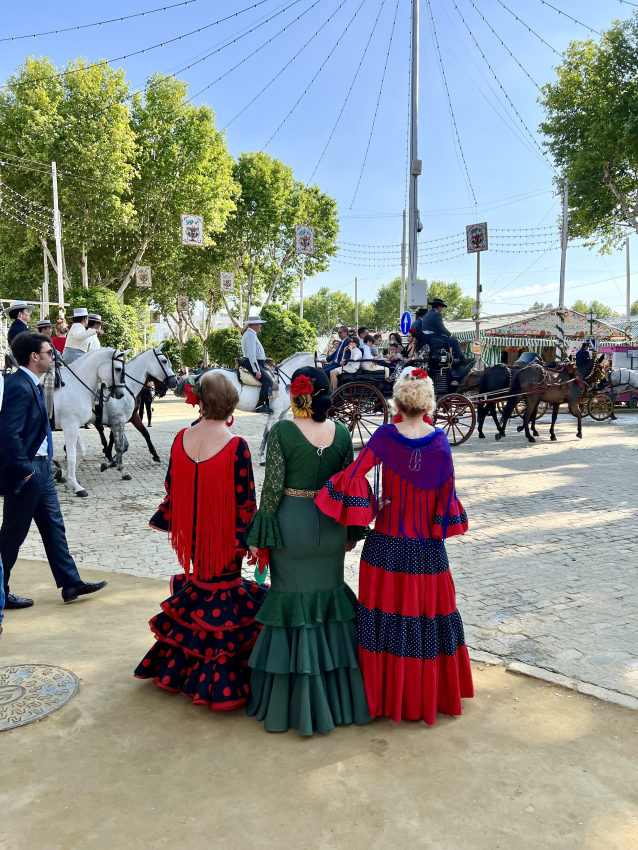
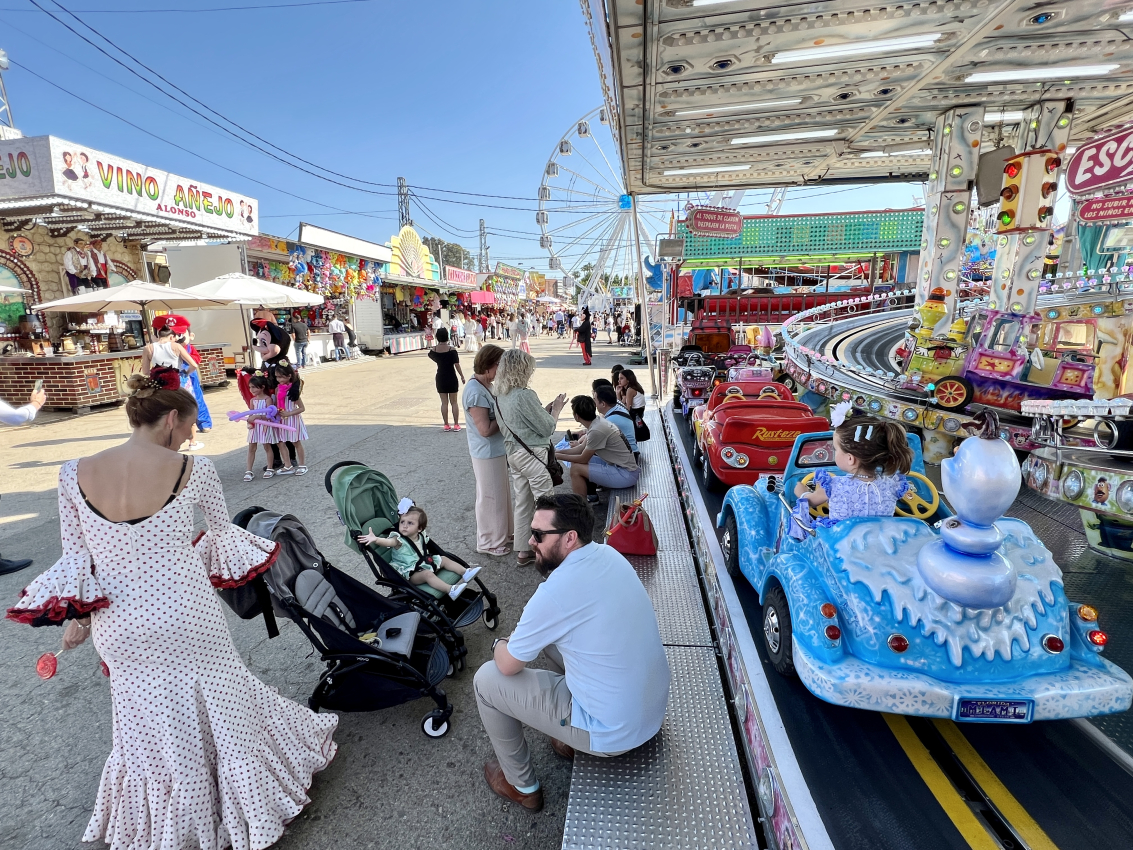
Founded in 1846 by Basque José María Ybarra and Catalan Narciso Bonaplata, Feria de Abril de Sevilla or Feria de Seville is an annual fair of much importance in Spain. It starts with a ‘Noche del Pescaíto’ when everyone eats fish for dinner and goes to watch the fairground lights being switched on.
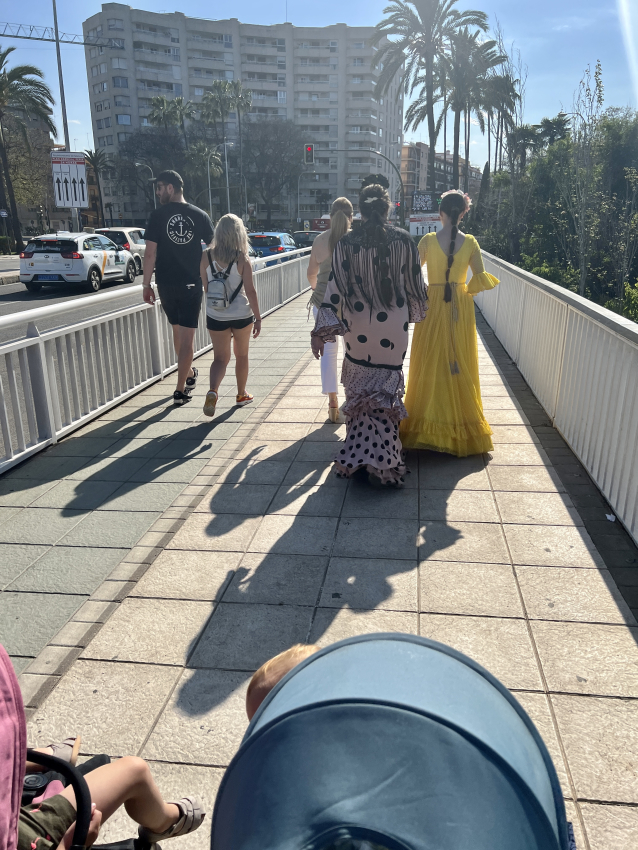
For that one whole week in April, locals dress up in their finest traditional wear. There are parades, carriages, carts, and flamenco dancers everywhere. You’ll also see bullfights, horse riders, and fair rides for children. With music, dancing, and parties continuing till dawn, it’s a continuous party that cannot be missed.
The next few ferias are on 23rd to 29th April 2023, 14th to 20th April 2024, 4th to 10th April 2025, and 19th to 25th April 2026.
If you’re going around this time, remember the festival now draws international visitors, so it might be difficult to find places to stay. Make sure you book a hotel in advance. Some good hotels close to the fair local are:
- Hotel Casa Palacio Don Ramón
- Hotel Casa de Indias By Intur
- Itaca Boutique Sevilla by Soho
- Eurostars Sevilla Boutique
15. Take a Day Trip
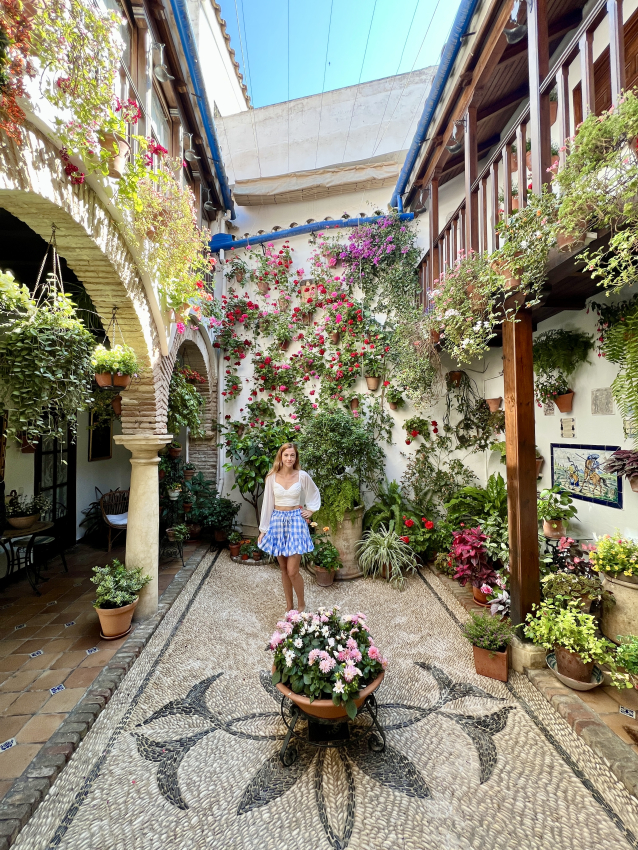
There are many beautiful and charming towns close to Seville that simply must be visited if you can make the time. The most popular trip would be to Cordoba, but there are also other options.
If you can’t, then a day trip is the perfect way to take in as much of these stunning towns as possible. Here are a few good choices.
- Take a day trip to see the Mosque-Cathedral of Córdoba, Córdoba Synagogue, and the Sotos de la Albolaifa
- Hike the Los Gaitanes and El Chorro gorges of the El Caminito del Rey
- Visit the ancient town of Ronda, and the secret white villages in the mountains
- See Andalucían horses dance, learn about wine in Jerez, and explore Europe’s oldest city in Cadiz
So that’s our list of top things to do in Seville, Spain. What are you going to do first?

Hi! I am taking my 4 month old along with my husband to Sevilla this March. How were the strollers on the cobblestone? Planning on babywearing a lot. Were the day trips doable with little ones ?
Best,
Julia
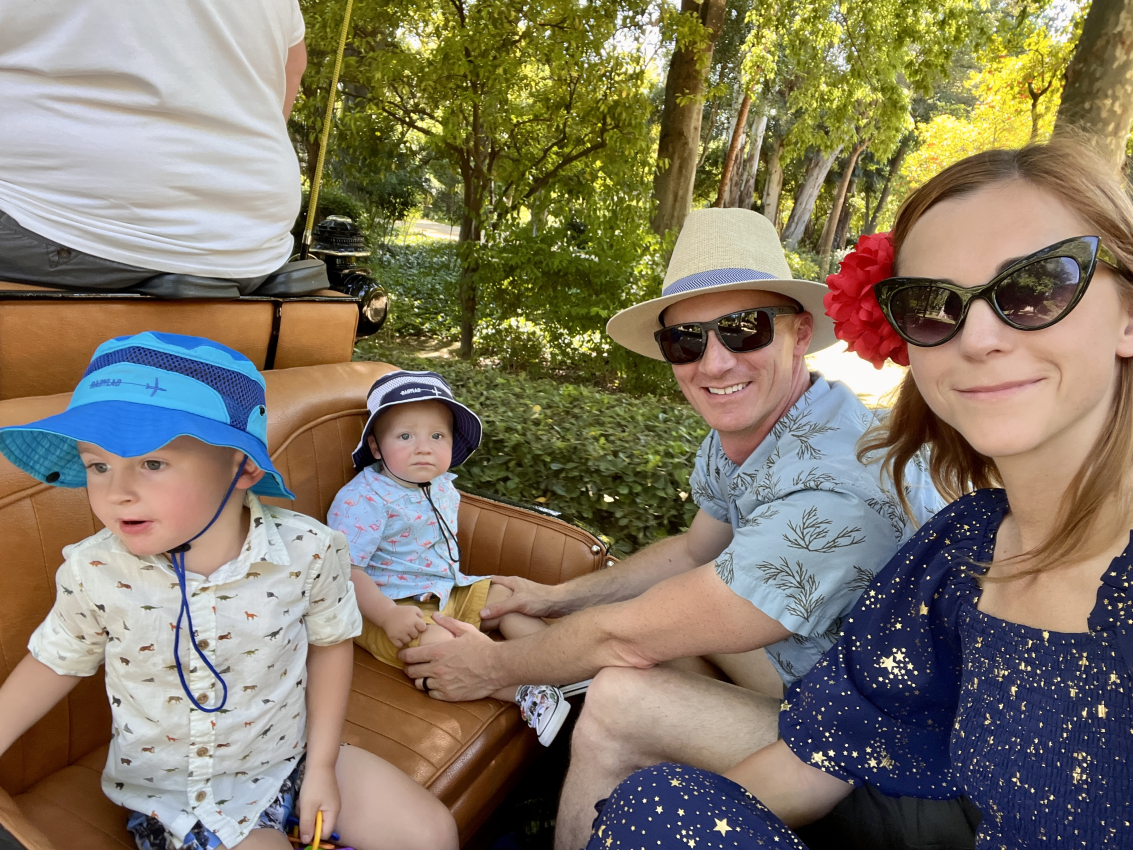
We had no issues with our two strollers 🙂 In regards to day trips I don’t see why not… a 4-month old will just sleep most of the time, so it’s really for the parents since no kids activities are needed 😉