
20 Best Traditional Polish Foods You’ll Love

One thing I noticed is that in the US many items presented as ‘Polish food’ aren’t actually Polish. I was even on a food tour in NYC once and got served ‘Polish cheese’ which was actually Gouda, just packaged in Poland (Gouda is a Dutch cheese).
While some people know a few famous Polish dishes such as Pierogi, Polish cuisine has much more to offer. As a native Pole, let me introduce you to some of the best Polish foods.
If you’re brave enough to try some weird dishes that aren’t weird to Poles but definitely raise an eyebrow of foreigners, make sure to check out my other list as well.
20 Best Traditional Polish Foods You Should Try
1. Pierogi
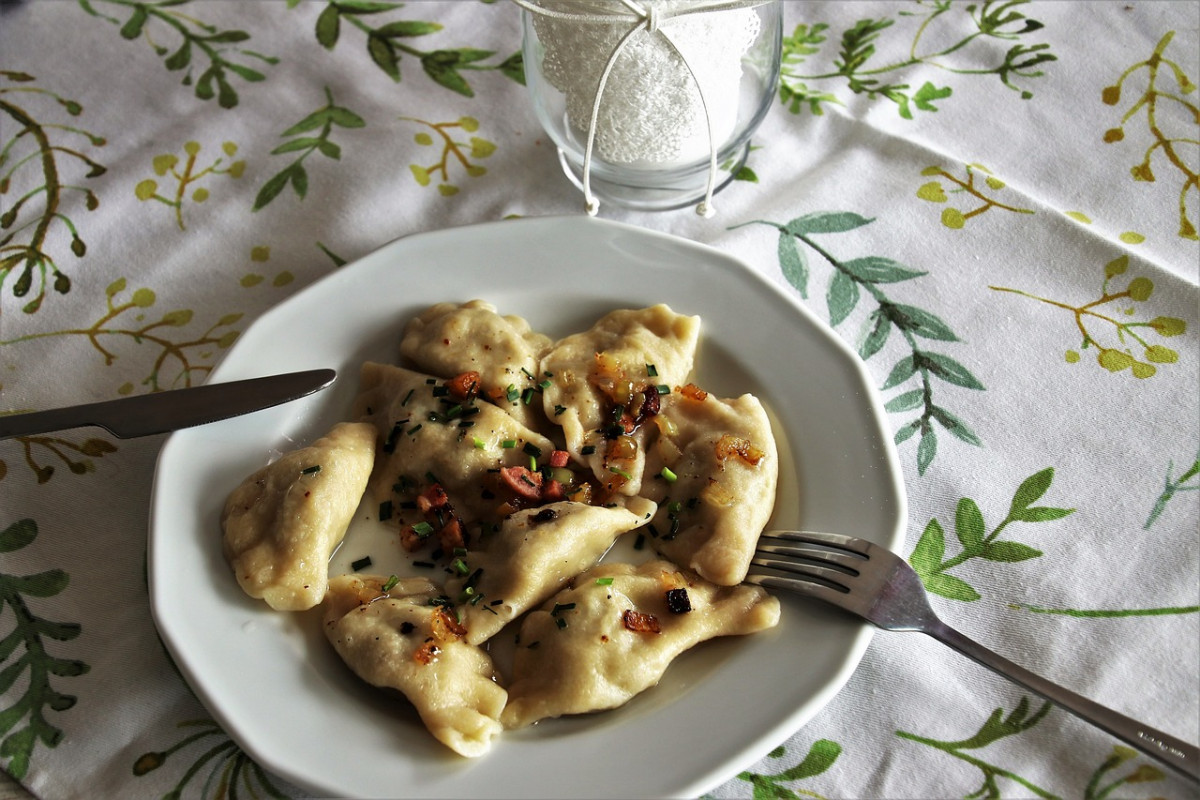
Undeniable, pierogi is the most popular Polish food. Pierogi is already plural in Polish (pieróg is singular), but in the US people love to call it pierogis which makes no sense. They are thinly rolled-out dough filled with a variety of fillings, savory or sweet. They could be served as an appetizer, main dish or dessert.
The most popular fillings are meat, sauerkraut with mushrooms, spinach, buckwheat, potatoes with fried onions, pepper and cottage cheese called Ruskie which means “Ruthenian pierogi“ (not “Russian” as they’re often wrongly classified), sweet cottage cheese with raisins and seasonal fruit (blueberries, strawberries and cherries), buckwheat, sweet cottage cheese or boiled potatoes with fried onions (called Russian dumplings.
You can get them either boiled, baked or fried, but traditionally in Poland you eat them boiled with butter and onions on top.
2. Golabki / Gołąbki – Cabbage Rolls
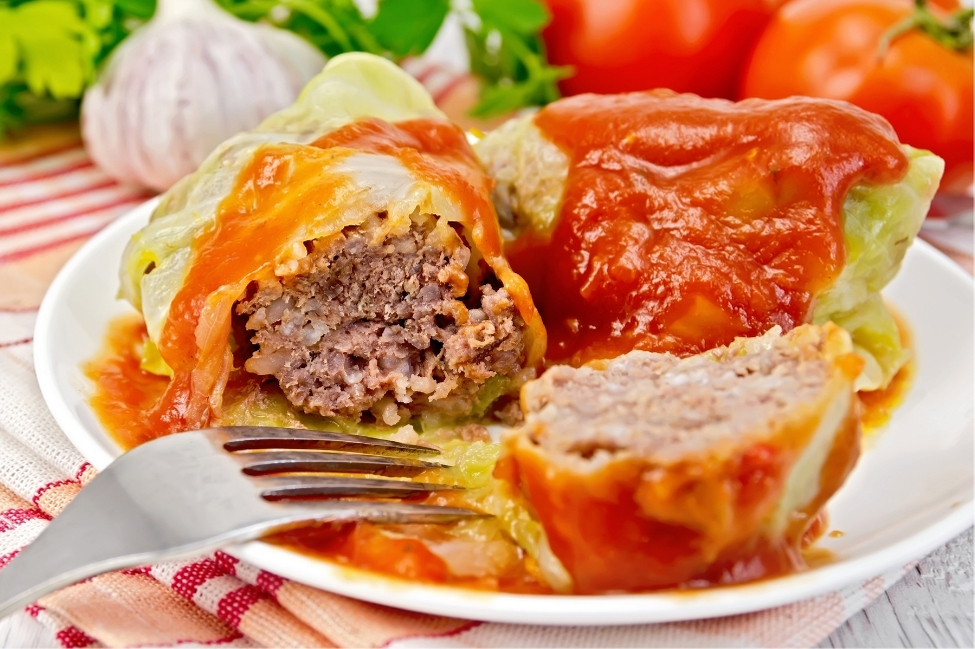
Polish golabki (translating directly it means ‘little pigeons’) is cooked minced meat, often with onions and mushrooms, wrapped up in a leaf of white cabbage and stewed. It’s one of the dishes that was surely brought to the US by Polish immigrants.
They’re served with either boiled potatoes or bread and poured over with a thick and creamy tomato sauce. Get recipe for golabki here.
3. Bigos
Poles love to pickle food. The Polish pickled cucumber is a bit different than the traditional gherkin you might be used to – it’s a bit sour, with a lot of dill, similar to kosher-style pickles.
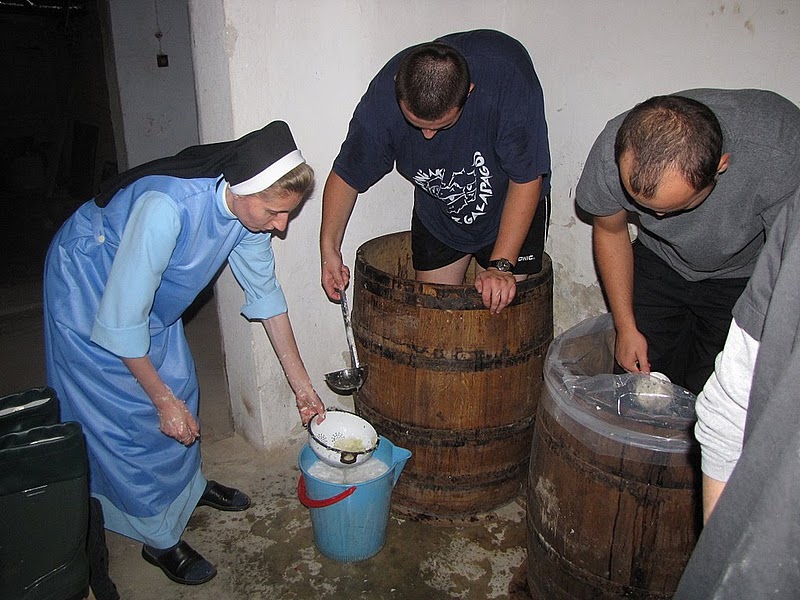
Cucumbers only pickled for a few days have a different, less sour taste than those pickled for longer. They’re known as ogórek małosolny, which literally means ‘low-salt cucumber’. There is also kiszona kapusta, literally sauerkraut, which might appear strange, due to the method of preparation. Like wine, one has to keep on stepping on it in a barrel…
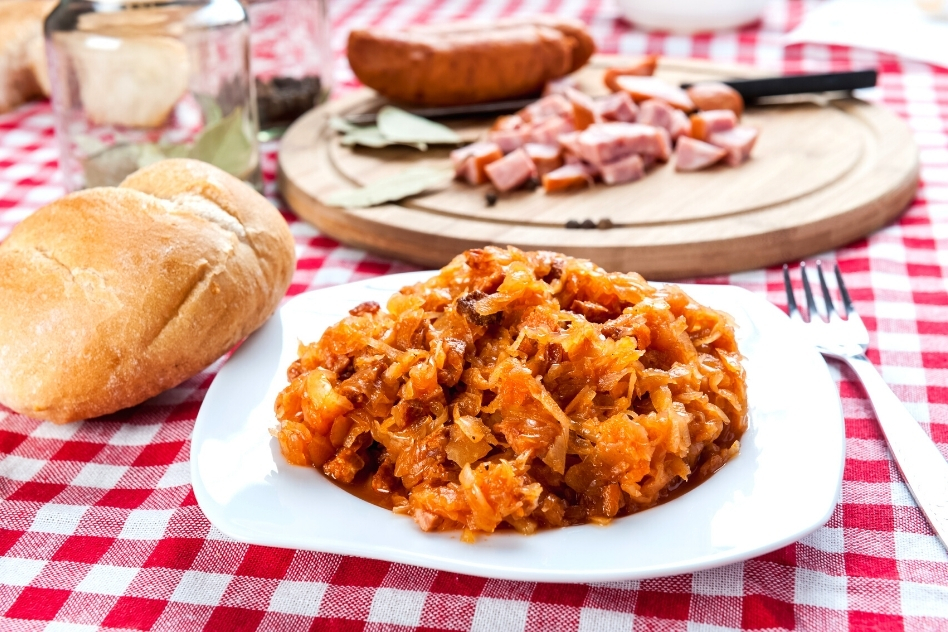
Bigos is a rich stew which is sometimes translated into ‘hunter’s stew’ is made with various types of chopped meats, sauerkraut and shredded fresh cabbage.
The recipe generally changes from house to house but it’s very hearty and sometimes describes as the Polish version of chili. Get a recipe for bigos here.
4. Kotlet Schabowy
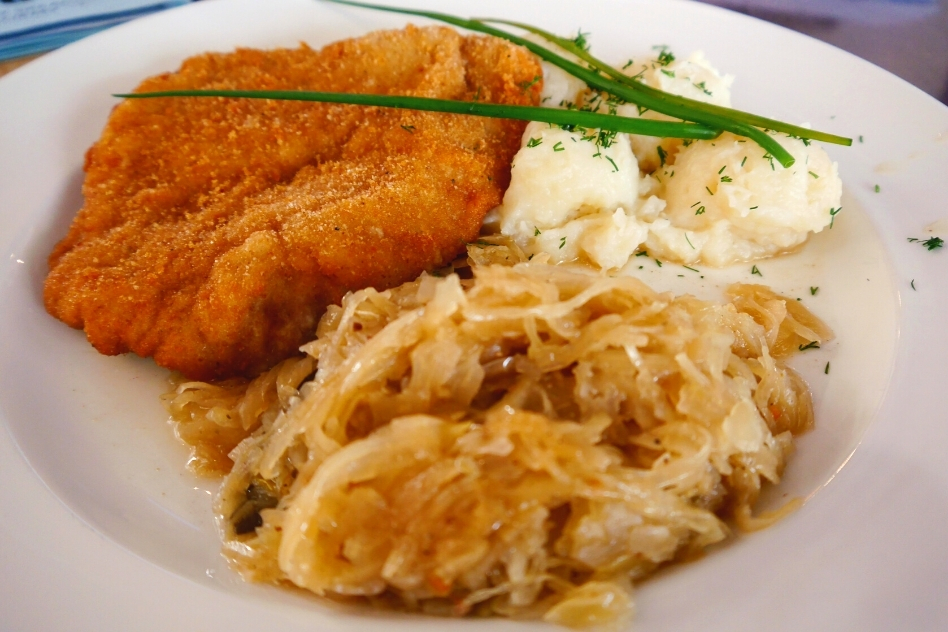
Kotlet Schabowy is a pork cutlet in a coating. It’s like Wiener Schnitzel, but thicker. If you ask a Pole to serve you something typically Polish, you’ll be served schabowy with boiled potatoes and warm beets – alternatively with a boiled carrot chopped in cubes mixed with peas.
The history of Polish kotlet schabowy dates back to the 19th century (which is way later than first recipes described in the most famous Polish cookery book Compendium Ferculorum from 1682) when the recipe was found in a cookbook by Lucyna Cwierczakiewiczowa.
5. Kotlet Mielony
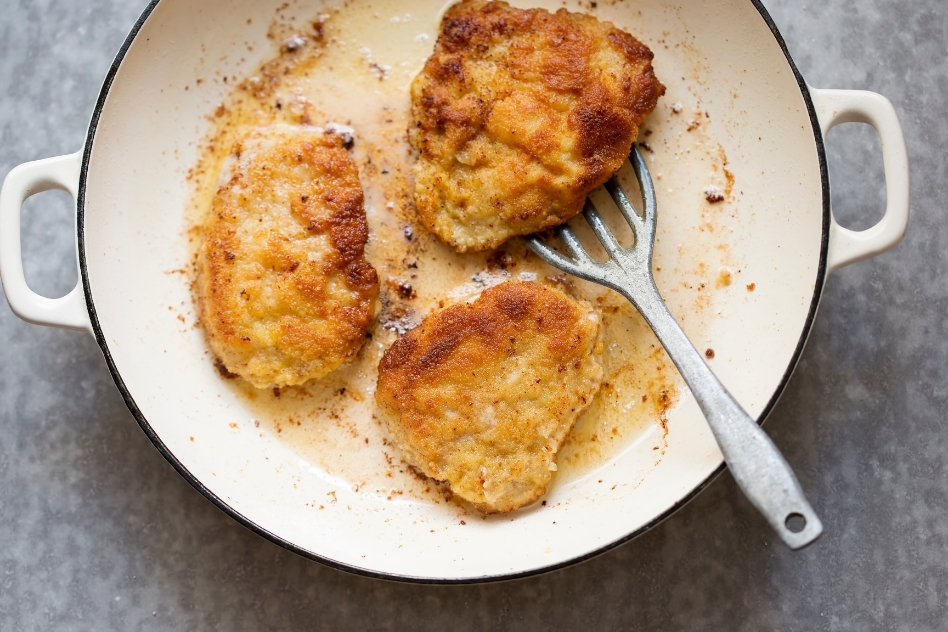
Similar to the Danish meatballs, the Kotlet Mielony is a flat, pan-fried meatball but in a coating. They’re usually eaten with boiled potatoes, or a cold salad like sauerkraut or pickled/boiled beetroots.
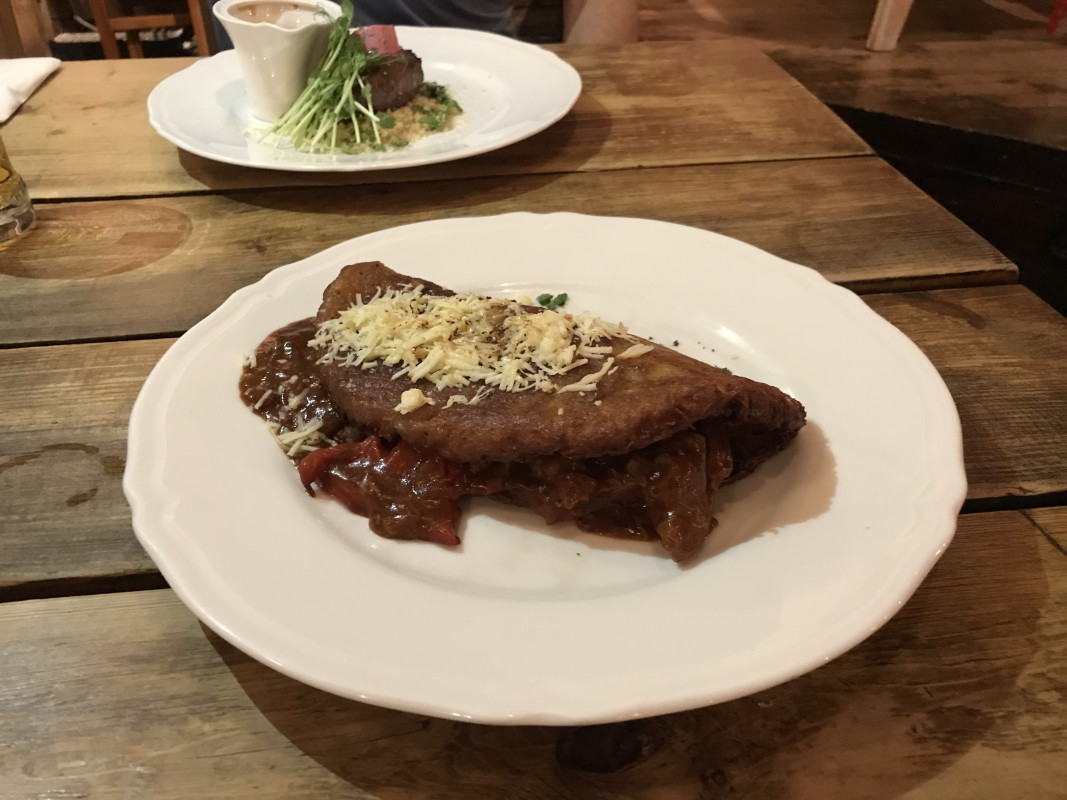
6. Gulasz
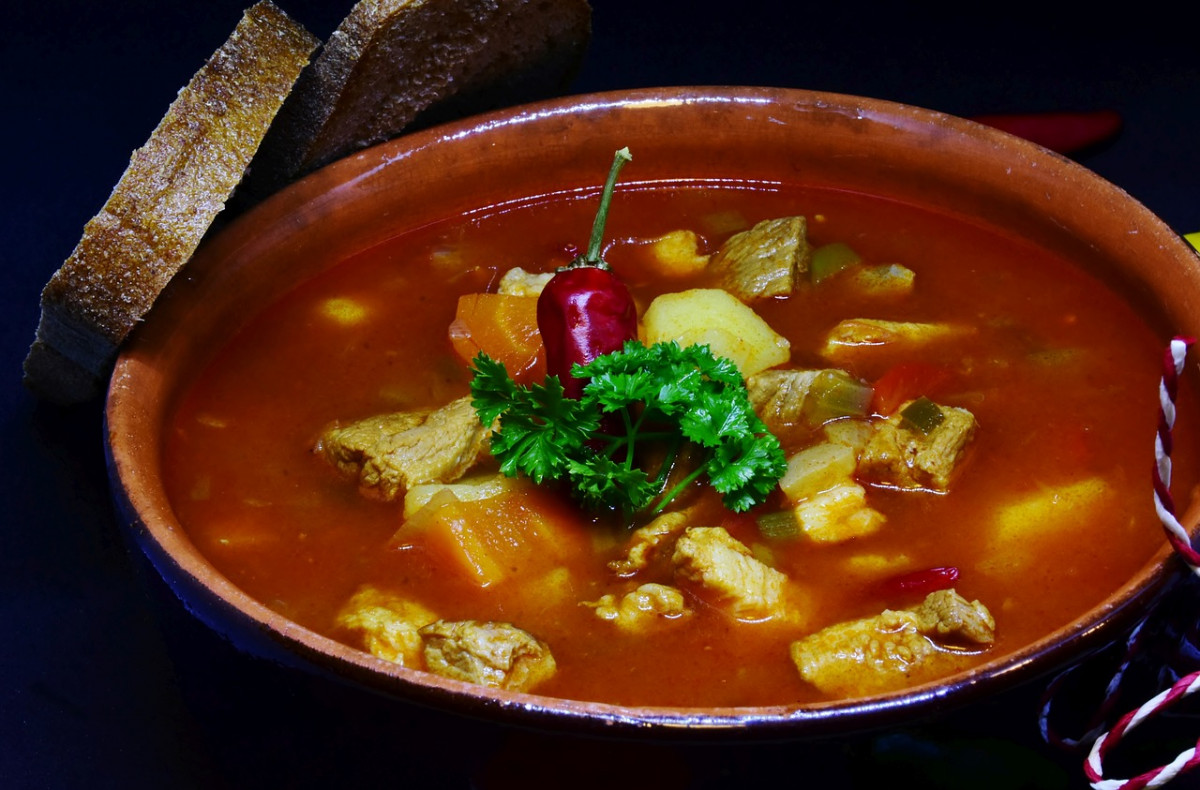
The gulasz in Poland is the local version of the well-known Goulash dish, of which many Central European countries have their own recipes. The main ingredients are usually tender pieces of beef and then a broth of bell pepper, carrots, mushroom, onions and paprika.
A typical way to serve the dish is with potato pancakes or buckwheat kasha (also known as toasted groats).
7. Kluski Slaskie / śląskie
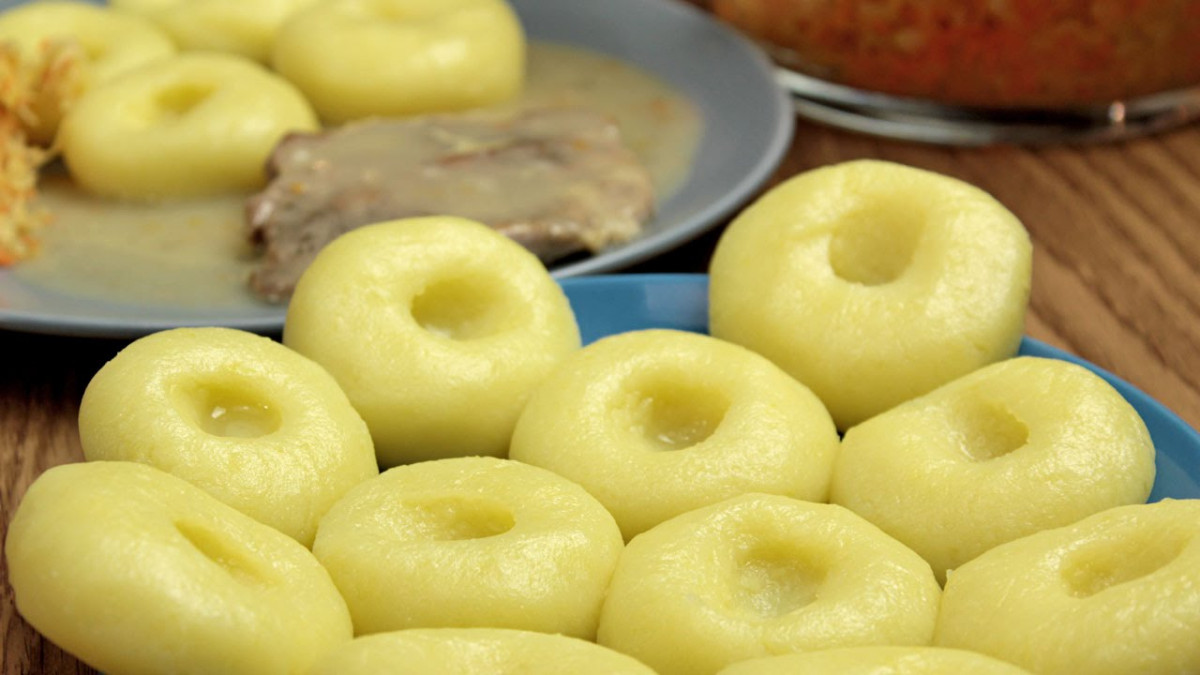
Known in English as Silesian dumplings, these are a simple recipe of eggs, mashed boiled potatoes and flour that are usually eaten with fried beef roulades and rich gravy with some boiled red cabbage.
Another version of these dumplings are kopytka – literally little hooves. They’re made the same way as kluski slaskie, but have a different shape. Get recipe for kopytka here.
8. Pyzy & Knedle
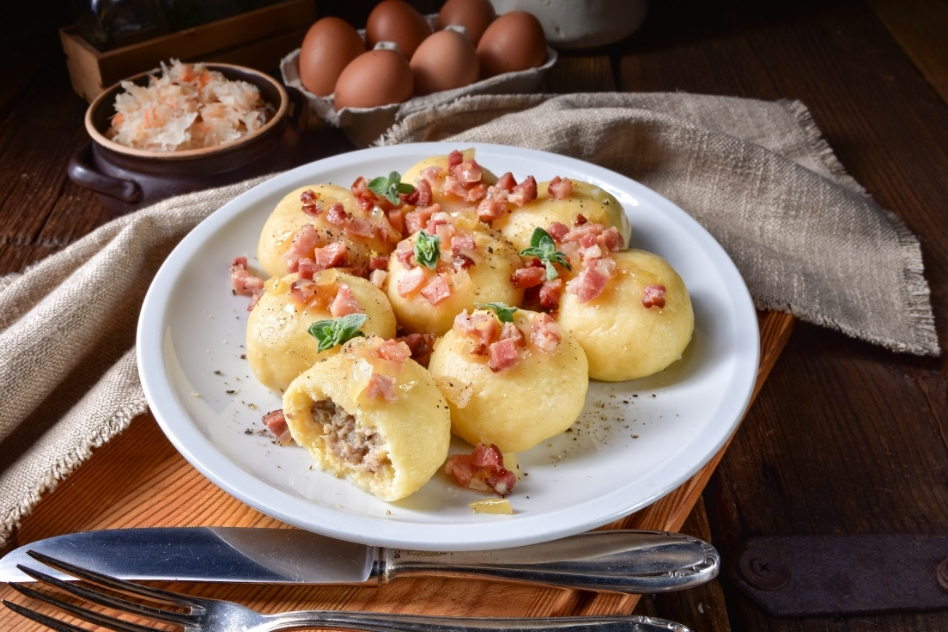
‘Pyzy’ is a type of large oval-shaped dumpling (the singular being ‘pyza’) stuffed with meat, twarog cheese or mushroom stuffing and boiled in water. They’re so big that they’re usually only served two or three in a portion as a main course.
‘Knedle’ are quite similar, made from a potato dough that can be both side dish or a dessert because it is stuffed with fruit like plums that are slightly sweet but also a bit tart.
9. Leniwe – Lazy Pierogi
The lazy man’s pierogi is a simpler substitute for the very popular Pierogi mentioned above which is what makes it different from the normal recipe.
The dough is made by incorporating dry curd cheese such as farmer’s cheese or ricotta and when it’s rolled out into the dumplings, it’s left unfilled. The Lazy Pierogi is usually served as a side dish with sour cream or crispy golden bacon bits.
10. Placki Ziemniaczane – Potato Pancakes
Authentic Polish potato pancakes are a traditional comfort food eaten all over the country. Everyone has their own family recipe but the base is always potatoes, grated onions, eggs and flour, flattened and fried into savory pancakes.
You can have them with mushroom sauce or sour cream. Get recipe for Polish potato pancakes here.
11. Golonka Gotowana – Pork Hock
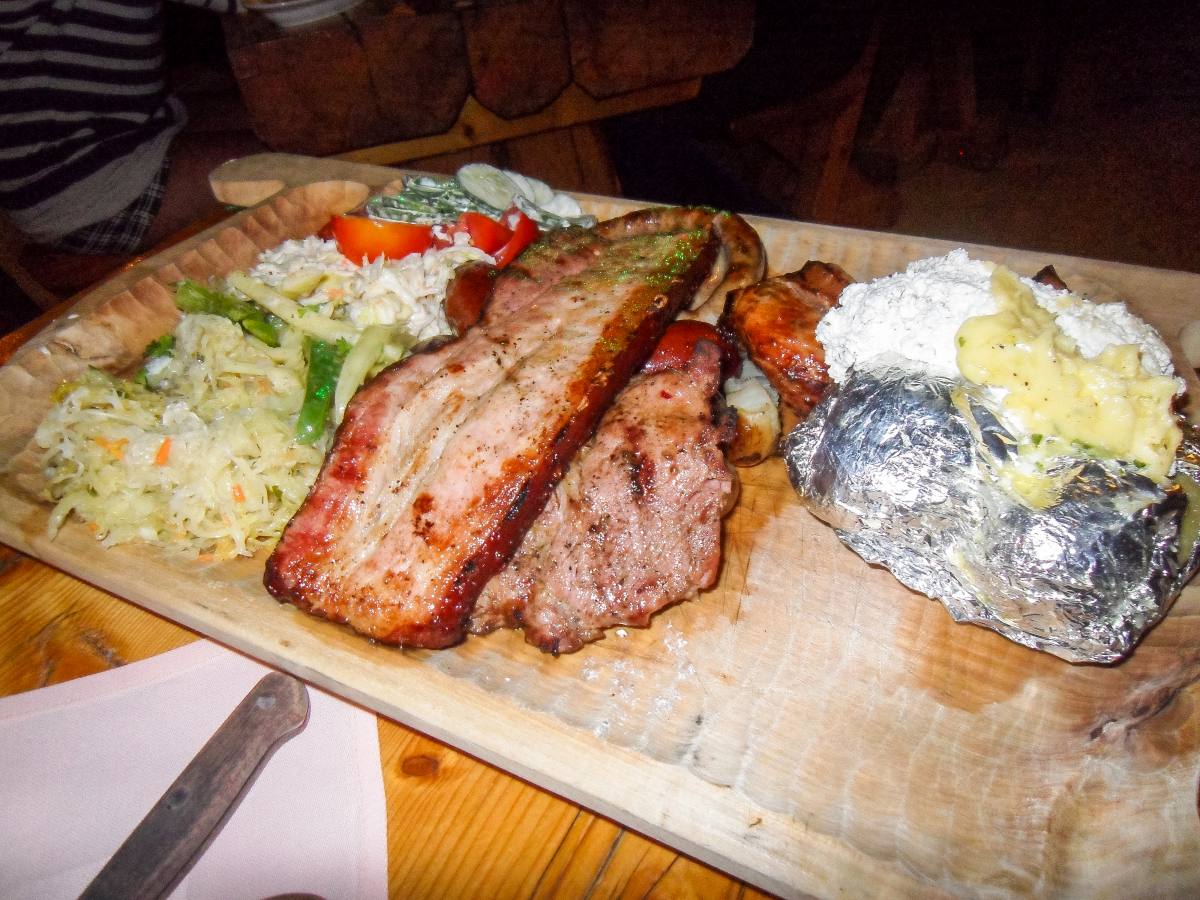
Pork hocks, or ham hocks or ‘knuckles’ are actually the ankles of the pig, and when made the traditional way are fork-tender and literally fall off the bone.
A lot of places smoke the hock these days but that is not the real Polish way. It’s served with roasted vegetables, boiled potatoes and of course, some sauerkraut.
It’s a simple meal, and since the part of the meat is quite inexpensive so was an affordable meal for the middle and lower class throughout the country’s history.
12. Zrazy
This dish actually dates back to the 14th century and used to be served to the nobility. Today it’s not too restricted and is a very common main course in most places.
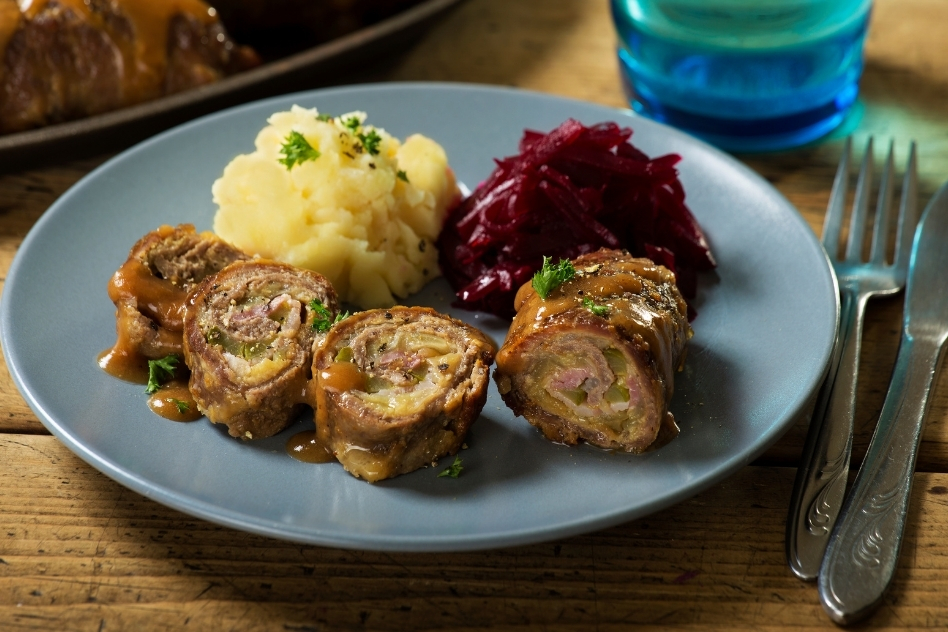
Zrazy (pronounced ZRRAH-ZIY) is essentially meat, usually beef, roulade that’s cooked for several hours in a slow cooker and served with potatoes and the popular side dish of red cabbage.
The beef is stuffed with various fillings like sauerkraut, mushrooms, onions and many more.
13. Ryba po Grecku
Literally translated, this dish means Greek-style fish, so it’s quite obvious that the Polish borrowed this cooking style from the Greeks.
The main course meal is fried fish fillets in a sauce made from a tomato base and can be served hot and cold.
14. Fasolka po Bretońsku
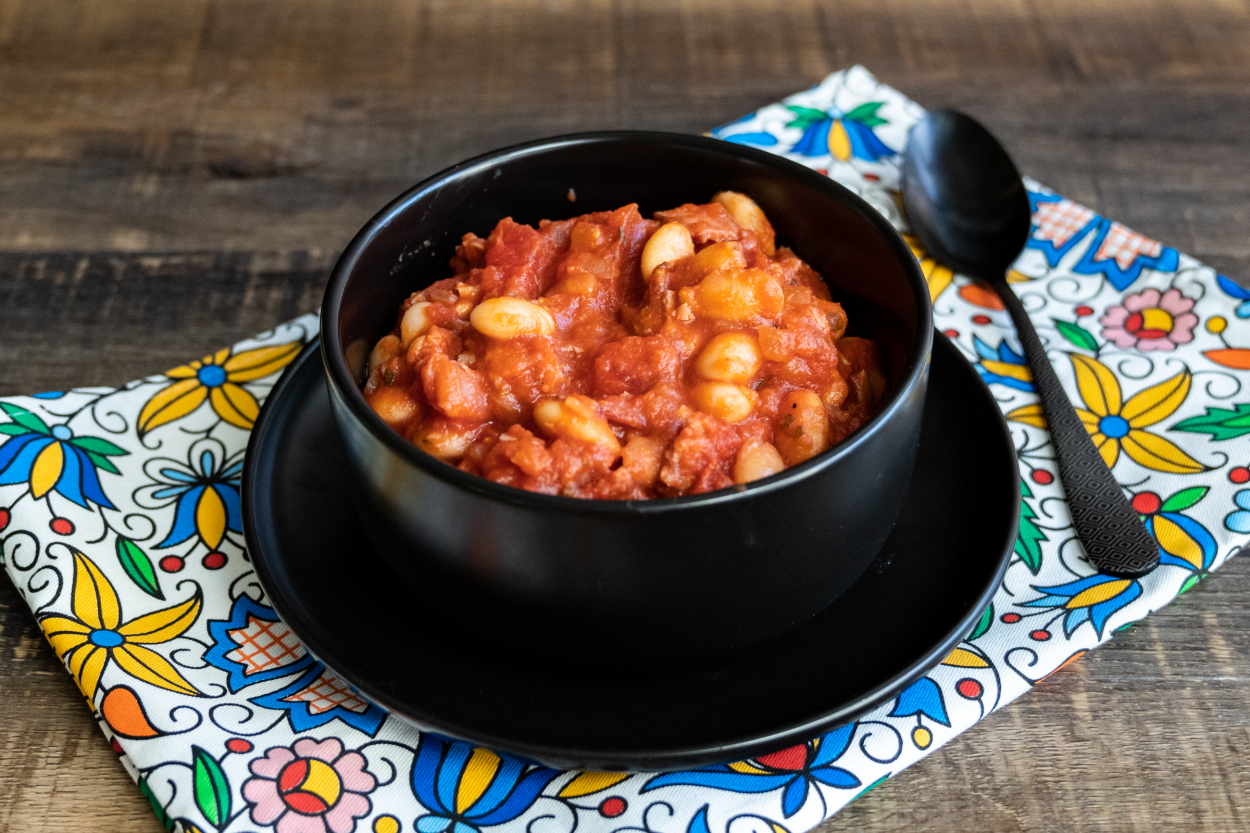
Fasolka po bretonsku is the Polish version of homemade baked beans. It’s made from Harico beans in a thick rich stew usually served with some fresh warm bread.
15. Ryz z Jablkami / Ryż z Jabłkami – Rice with Apples
This may sound a bit like an odd mixture but this pudding is actually a delicious autumnal dessert baked with cinnamon and sugar. It’s served with a side of whipped sour cream with some sugar.
16. Barszcz z Uszkami
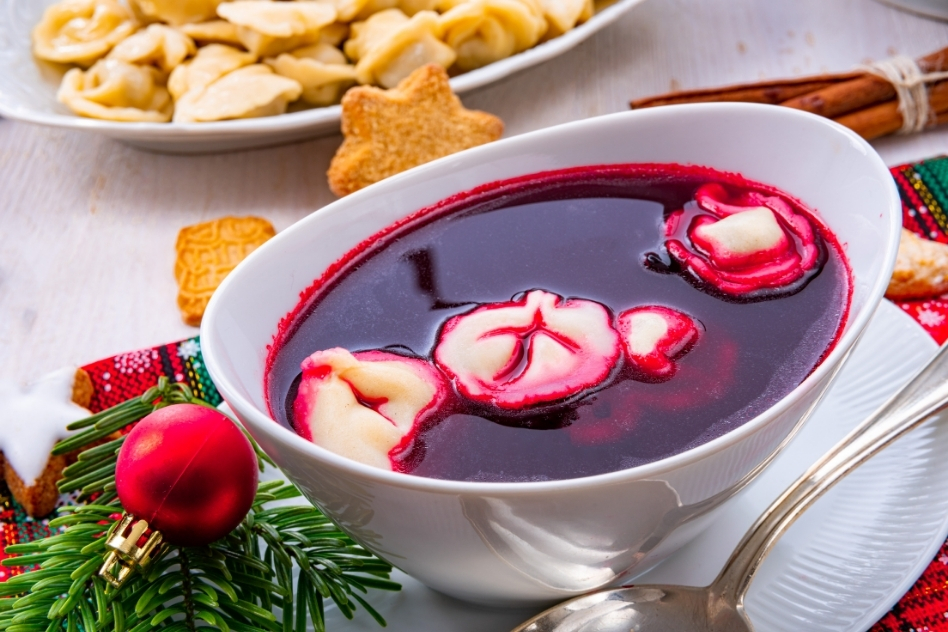
The word Uszka actually means ‘little ears’ and it’s quite appropriate given the shape of the little mushroom or minced meat dumplings that come in the Barszcz which is a sour soup or borscht that’s colored red by its beetroot base. Get the recipe for red borscht here.
It’s one of the most popular Polish soups.
17. Zurek / żurek
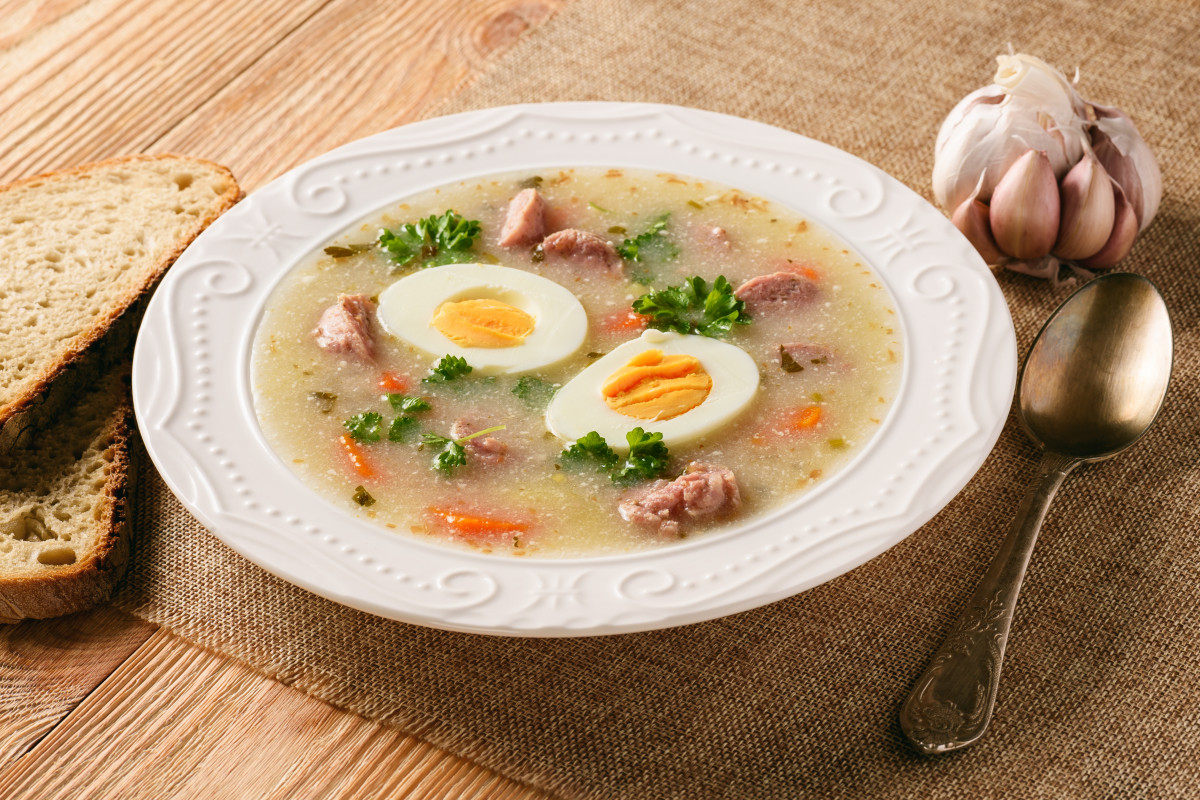
This unique and humble soup is popular in many West Slavic states but the Polish version is traditionally eaten around Easter time.
It’s known as the Polish Ryemeal Soup and is made by fermenting the cereal (Rye) and cooking it with sausage, bacon or ham. It’s creamy, smokey, cooked with lots of garlic and is not as sour as fermenting suggests, it’s more a rich savory sour taste.
Get recipe for Zurek here and find more iconic Polish soups here.
18. Oscypek & Bryndza Cheeses
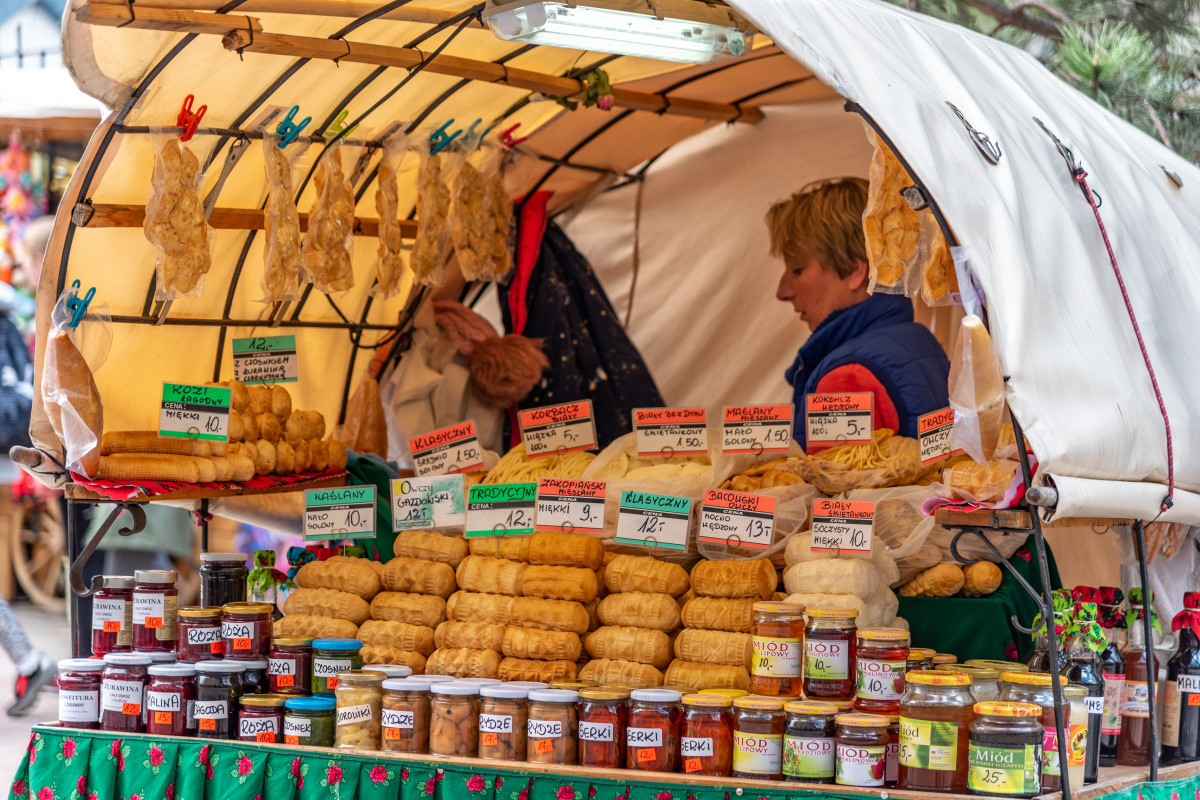
Who doesn’t love a good traditional cheese? Traditional Polish cheeses like Oscypek and Bryndza are made with sheep’s milk from the mountain meadows of south Poland, the Tatra Mountains. They’re made by smoking in a wooden oven or hut called a Bacowska.
The process is so well known that in order to preserve the tradition and methods, the production is given an EU subsidy which allows the shepherds and cheese-makers to continue the processes.
19. Wild Mushrooms
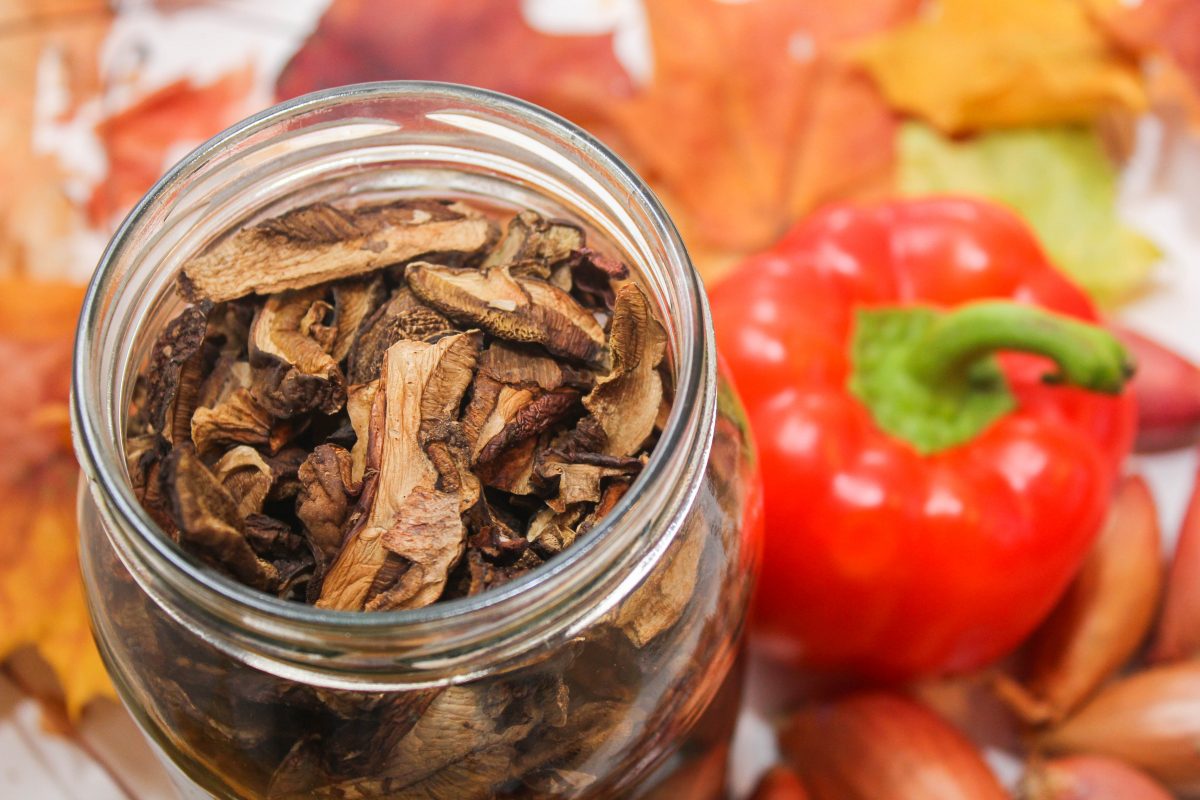
Wild mushrooms are my favorite part of Polish cuisine. Mushrooming is a popular family activity, so unsurprisingly whatever you collect is eaten in many forms. I think as a kid I’ve learned to distinguish at least 20 different types of wild mushrooms.
They can be served as a sauce, soup, or many other ways. Even if you don’t like the traditional white mushrooms, I’d advise you to try the wild fungi.
During the summer months, a popular breakfast that Poles have been serving for decades is scrambled eggs with chanterelle mushrooms.
20. Famous Polish Desserts
Paczki / Pączki
These Polish doughnuts are dusted with sugar or bits of dried orange zest and filled with a sweet filling similar to a jelly or jam.
Learn how to make your own Polish paczki here.

Sernik – Cheesecake
Made from a rich buttery pastry and being a cheesecake with a Polish twist, the creamy top layer is made from a sweetened farmer’s cheese called twarog.
Learn how to make Polish cheesecake here.
Makowiec
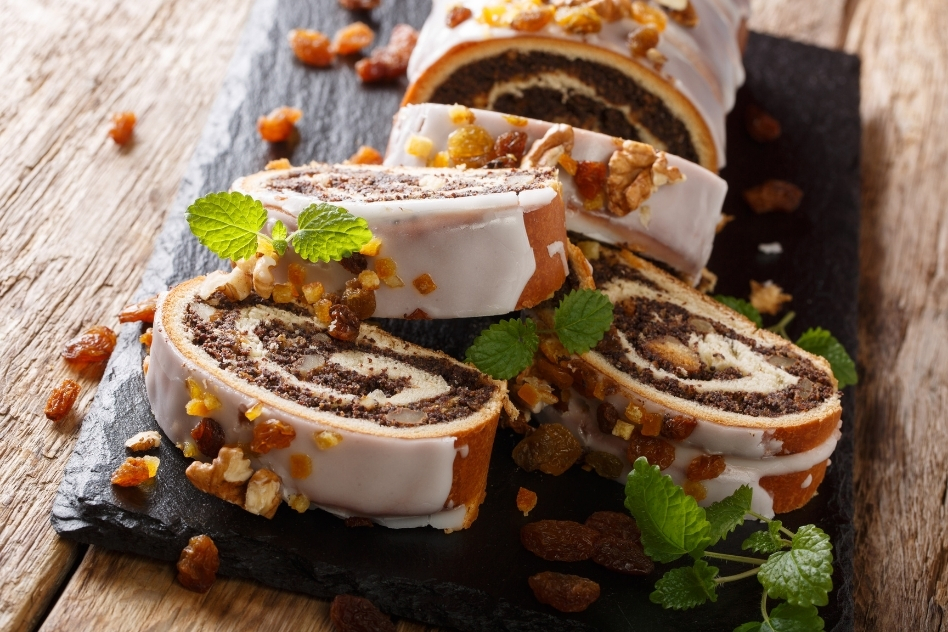
This is one of Poland’s most popular sweet foods, the Poppyseed roll (pronounced mah-KOH-vyets) is rolled out sweet yeast bread with a rich bittersweet filling of poppy seed paste.
Alternatively, it can be filled with minced walnuts or chestnuts. Learn how to make makowiec here.
Piernik
With a base of three simple ingredients, ginger, honey and treacle, the Piernik is the Polish Gingerbread loaf cake from Torun, traditionally made for festive occasions like Christmas.
It’s one of the most common Polish candies.
Kisiel
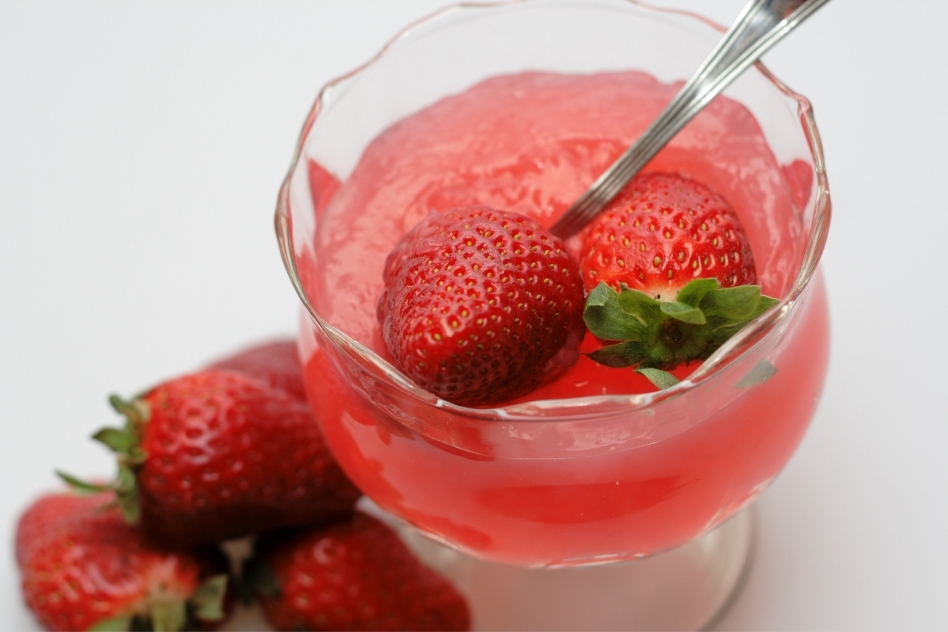
Probably one of the simplest Polish desserts, Kisiel is essentially sweetened fruit puree, thickened with some sort of starch. It comes in so many different flavors including strawberry, coffee, chocolate, vanilla and almond.
It can be served hot or cold and is usually topped with a dollop of custard sauce or cream.
Faworki – Angel Wings
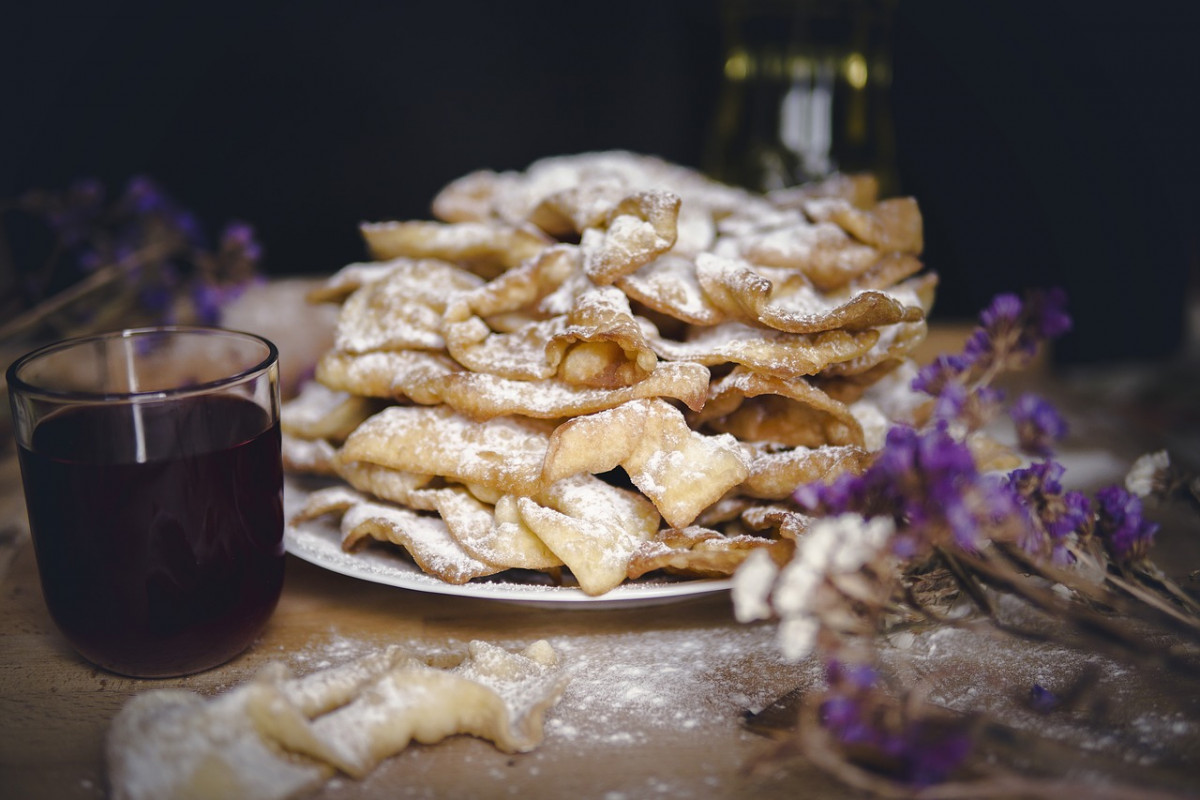
These crispy wisps of pastry dusted with powdered sugar have become quite popular all over many European countries but the Polish version definitely has its own unique twist.
You’ll see them most during Christmas time or traditionally during Carnival time around Shrove Tuesday.
Get the recipe for Faworki here.
Sekacz
The Sękacz has both a Polish and Lithuanian history and involves such a big process to make that it is very rarely made at home, but is nonetheless a very popular sweet treat.
Translated, the word means ‘knotted cake’ and is made on a rotating spit, greased with butter in a big over, but traditionally over an open fire. Each layer has to cook completely before another layer is poured over it until a giant cake is made that resembles a tree with irregular knots.
The origins of this cake and its cooking methods come from the fact it preserves very well. In the old days, the cows could only be milked and the hens would lay eggs only in the summertime so the cake would be made and could be kept and eaten throughout the long cold winter.
21. Polish Candies
Krowki / Krówki – Little Cows
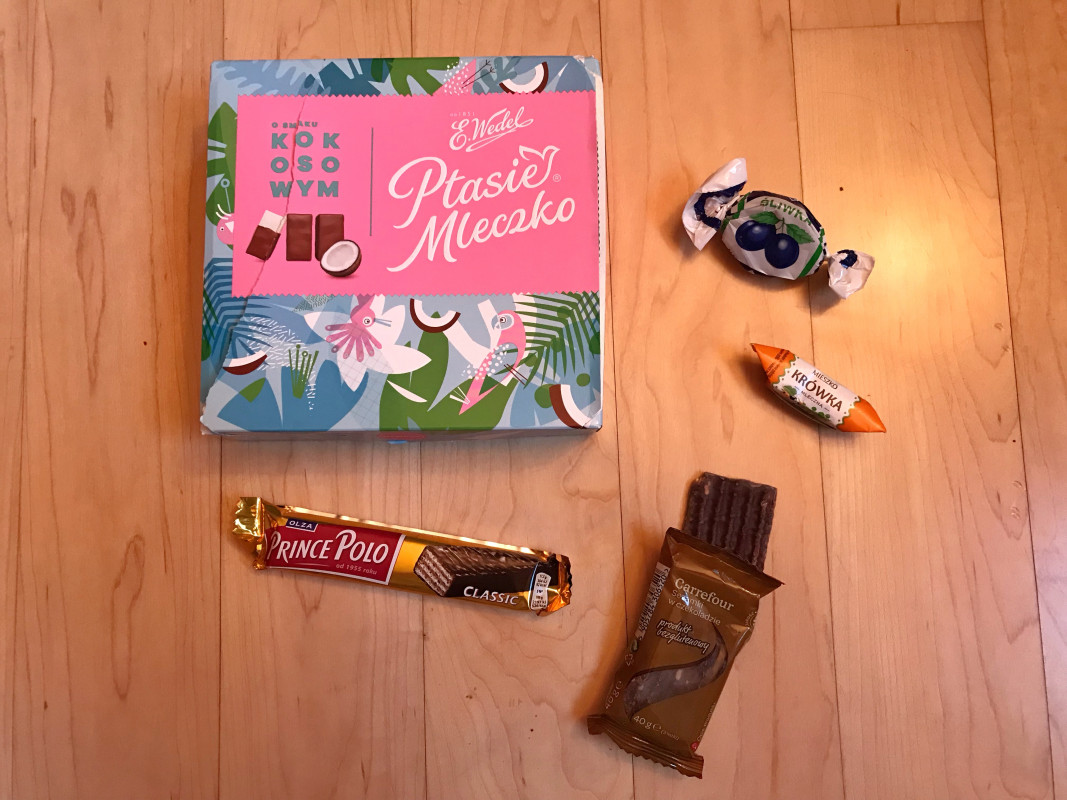
Krowki (already plural; krowka singular), literally ‘little cows’. They’re Polish semi-soft milk toffee candies. When they were first produced, they were wrapped up in pieces of paper with a picture of a cow which resulted in their name.
Krowki are all malleable once produced, but with time they start to crumble, as a result of sugar crystallization. The best krowki are still soft inside.
Prince Polo
Prince Polo is a Polish chocolate bar, but it’s also sold in Iceland under a different name. It’s a bar of dark chocolate covered wafer, with four thin layers of wafer. You can find different flavors as well as seasonal ones, but the traditional one in golden packaging is the one you should try first.
I just noticed that Amazon introduced them in Prime, if you live in the US and want to try them.
Sliwki w Czekoladzie – Chocolate-coated Plums
Chocolate covered plums are very traditional. An entire plum is covered with a cocoa mass and covered with hard chocolate icing. Some find these plums sour.
Ptasie Mleczko – Bird’s Milk
Ptasie Mleczko is something that could be described as a mix between a marshmallow and mousse. They’re simply rectangular-shaped pieces covered in chocolate.
Traditionally, the company that invented it – E. Wedel, made it only vanilla flavored, but with time more flavors like chocolate, strawberry, coconut, or caramel appeared.
P.S. So many of you were asking if you can get some Polish snacks in the US – you can! There’s a thing called Taste of Poland box on Amazon and they sent you a mix of imported goodies.
Kukułki – Cockoos
I remember kukulki as those candies that my grandma liked, but only allowed me to have one. Cuckoos have a hard striped coating with a great alcoholic filling – 1.5% of spirit.
Sezamki – Sesame Snaps
These sweet treats are now commercially mass made and sold in most grocery stores. They’re made from toughened caramel with sesame seeds sprinkled inside.


Nice post, Anna! Wild forest mushrooms, Polish bread and kluski are the things I miss the most. Very happy to be back in Poland for Easter, though. I’m gonna have a guiltless feast! 🙂
I want some kluski with wild mushrooms now 🙂
I love Polish food. Although it’s very different taste from my country – Portugal – I tend to find it very exotic. Every time I go to my wife’s parents place in Poland, I taste so many different dishes. Very interesting post. Thank you. Greetings from south Morocco!
Wow, Nóżki w galarecie seems extremely similar to one of the most popular dishes among Lithuanians. Only the name of it is completely different. In Lithuania it’s called ‘ Šaltiena’. Also, in this website: https://www.travelbaltics.eu/11-usual-lithuanian-dishes/ you’ll find more similar dishes that are common in neighboring countries.
Our local Lithuanian church has weekly stuffed cabbage and pierogi sale. The Polish community call it their own.
WHERES THISNLITTLE LUTHUMANIMM CHURCH PLEASEEE
my roblox girlfriend is polishfoodlover123
yea i just ganked ur girl srry
did i give you ANY conent to speak?!?
HI IM GEORGE AND I EAT EVERYTHING ON THIS LIST
HI GEORGE I EAT EVERYTHING ON THIS LIST TOO!!!!111111!!11!!
Hi Georges, I printed out the list and ate that.
I EAT MYSELF
Great post! I was not convinced to Polish food and I didn’t even want to try it. I have visited Poland few times, but I didn’t try traditional food. Last time my friend took me to great restaurant called the Akademia. Even though it is a Polish restaurant, they preapre everything in more modern way. Everything was surprisingly delicious and I was really delighted! I would never think that I would like Polish dishes so much:)
I do agree that some of the Polish traditional dishes are crazy, but most of them is really tasty. The dish that has surprised me the most was “tatar”. I couldn’t imagine that people eat just raw meat and it is normal for them :p But a friend of mine once took me to a cozy bar in the Old Town called Bubbles and tricked me into trying tatar. I loved it! I don’t know if I would try it in any different place, because it still seems a little bit odd, but every time I visit my friend in Warsaw we go to Bubbles to have tatar with champagne – and it is awesome!
Oh right. It’s popular in France too 😀
Hi Anna,
I’m writing an article about the polish tradition of mushroom picking for my magazine Poland Today and came across your blog – I really admire how you’ve managed to travel and achieve so much at the same time.
Love the evocative memories of mushroom picking in your childhood!
All the best, Richard
Hmm typical flaczki that u can buy at a grocery store (from some more renown brand like Morliny at least) smell like typical broth and the taste is not far from that, maybe a bit sweeter because of carrots and allspice.
Some more bizarre food would be probably tatar (finely minced raw beef sirloin with egg yolk, chopped pickled cucumbers(korniszony) or capers, mushrooms, chopped onions, salt and paper, it’s very good. Zakwas chlebowy is a basis of my favorite soup called Żurek. Poles also use offal for various dishes such as Krupnik on chicken stomachs, pate based on livers and hearts, some old people even eat chicken lungs in vinegar or brains (tbh i have never tried these two and im not going to 😀 ). There’s also beef tongue in horseradish sauce. Salceson is made out of boiled heads, ears and other gross left overs. There’s probably more but I can’t think of it now.
Salceson, whether White or Black is extremely delicious. If you eat anything like pork in gelatin, then you will like salceson. It is almost the same thing. As per using only leftover parts, of a pig, you are slightly misinformed. Perhaps years back maybe, but not now. Kaszanka is like England’s blood pudding, also delicious. The blood is cooked. How do you eat your steak – rare, medium? The sight of blood doesn’t bother you? Do you squeeze out the blood from the steak & then eat it? Well, what can I say? On the other hand, do you like bacon? Do you fry your eggs in bacon fat? Have you seen how bacon fat looks like when solidified?? Exactly like smalec! ! So unless you have actually tasted something don’t mock it. By the way, smalec was most often eaten when there wasn’t any other food available. Not everybody had access to butter. Pork fat, ie lard kept well for long time. Nowadays, people are more cognizant of cholesterol and it’s effect on the heart and don’t eat it as often. But, ask Kentucky Fried Chicken what they fry their chickens in? Yes, exactly — lard. Smacznego!!!?
I used to travel to poland every summer, so only 1 or 2 of these are offputting to me.
how about kogel mogel?
i used to like it as a kid a lot, now … not so much
I never liked it haha! Yuckie 😀
Co jutro robicie na obiad? Ja ugotuje rumfordzka wedlug starego przepisu. Jest przepyszna, poszukajcie sobie w goglu: zupa rumfordzka babci
Yes, milk soup was my childhood nightmare as well. haha along with even worse Czernina
Much of Polish food was born out of necessity during the hard times of the turbulent Polish history. Nothing went to waste. Much has ended up as delicious dishes in modern day Poland. Smacznego!
All this looks so delicious and I bet it tastes amazing! My family will love this.
I can not wait to try this at home. This is a great way of introducing healthy foods into our menu. Thank you.
Wow, very interesting Anna, I have followed you on your global journeys but never twigged such a local Polish connection (you were in Central America for a while I recall) and yet there are FIVE foods here which are uneaten by me despite having visited Poland over 20 times!!! The “pierogis, pierogies” plural thing grills me too – crazy use of the word but then again my Polish mates also told me that officially “chipsy and nachosy” are also wrong, as chips is already plural. Smacznego!
I cwrote to your blog a couple of times in the last month about renting a car in Italy, where I just returned from a wonderful vacation. But now I just want to say how much I enjoyed reading this section on Polish cooking! My parents were both Polish (one raised Catholic and one Jewish but neither remained religious)–they came to the U.S. because they had to leave Europe (actually Paris, where they were then living with my two older siblings) in 1939. My mother was a wonderful cook (she even published a cookbook!), and we loved all her Polish cooking and her continental European cooking as well! One of my favorite Polish desserts was her “mazurka” made with a plain sablée (short) crust and thick icing–the icing would be one of several flavors–orange, vanilla bean, or chocolate. It would be baked in a rectangular pan as for brownies and then cut into squares. There was also an almond mazurka. Also, a terrific babka with just raisins which was more like bread, or when sprinkled with rum and covered with frosting, an essential part of our annual Easter feast (we were definitely religious about food, growing up!) Your list of Polish foods inspired me to try more of my mother’s recipes. (I make our family version of Bigos every winter)…..
…we were all indoctrinated in mushroom hunting as well, when we moved back to Europe after the war (I and a younger sibling were born in the US after my parents emigrated). Wonderful memories!
Very impressive list. Although I haven’t tried most of these dishes, they sound so similar to many Belarusian dishes. It’s definitely not a surprise considering long history these countries shared.
Great stuff….I’m 100% polish. My mother’s maiden name is Gotzelski and my father’s name was Pacholski. Can’t believe you mentioned “duck blood soup”. Grew up on that soup but usually egg drop noodles were added.
Excellent for every foreigner. I know what I mean because I am Pole. Congratulations Anna.
Excellent write-up. No Polish blood in me, but my little wife is 100%. And I do most of tge Polish Cooking in our house. I do up a couple batches of bigos every winter. This one I will distribute a lot of it to some starving college grandbabies. Thanks f3 the additional ideas.
Thank yu!
I say: maczki, iryski i raczki. These sweets are my childhood memories.
My grandma was always trying to feed me with raczki and I didn’t like them, haha! But I don’t think I’ve ever even heard of maczki or iryski.
What about Czernina? This is REAL Polish cuisine.
Czernina is a historical food, not traditional currently eaten. Nobody eats it now.
I love czarnina and Koloc which is pronounced kowots from the mountains of South. Poland
Any info on that.
If you say duck soup people will eat it but when they find out it is made from ducks blood they can’t handel it
Nobody eats Czernina nowadays and it’s pretty much impossible to find at any Polish restaurant in Poland as well.
Czarina is very popular. You must kill an Duck for authenticity.
i am from poland and when my grama comes to stay every day we have pierogi
Where’s the mention of Flaki? The best!
I put it in my Weird Polish Foods article, because while it’s traditional it always seems weird to many foreigners 😀
I’ve always loved it, and miss it here in the states! Not so easy to find at the butchers!
Hmm,
Most of those food are common in all central Europe.
Not really typical only for Poland 🙂
Right: I was going to say, most of these foods are also very popular in Russia, but often with different names.
Okay, I’m cooking tomorrow!
What a wonderful website that I’ve stumbled onto. So many memories of
my childhood Polish at home, and English on the street and in school. Born and raised in Toronto, Canada in 1941, exactly 100 days before Pearl Harbour.
Parents were farm teenagers ( not even one day of schooling ) who qualified for 2-year work contracts in Canada [ boat fare would be forgiven if they completed their contractual obligations ] in the early 1920s. They met years later at a church social and learned their home villages were only 4 km. apart. My Mom wrote home to her eldest sister, the family matriarch, since her father was working for Kelloggs in Michigan, sending money home, to help with their family apple orchard, and passed away in USA. Sister granted permission for Mom to marry my Dad. How quaint ! Dad had run away, as a teenager, from the family wheat farm, to join up with the Austrian Calvary who were camped nearby. He envied their fine uniforms and excellent horses. His older brothers had wrote him that Dad had said, no place on the farm for him, if he comes home from WWI without an arm or a leg.
born : Mieczyslaw Oszczudlowski
at 21 : changed to Mitchell Michael Oakland
Thank you for the Polish childhood memories
Great post Anna. Polish cheesecake is delicious as are lots of the dishes you’ve mentioned. I was surprised not to see ROSÓŁ in your list. Where I live in Poland it is eaten every Sunday without fail, it’s tasty and very nourishing.
I have a separate post on Polish soups. Although I do feel that while popular Rosol is a very international soup eaten everywhere, so it’s not the most iconic soup 😉
Where does KIELBASA (white and smoked ) and Kiszka fit in?
When I lived in Poland, I tried almost everything. The cuisine is very poor and simple. I can’t even say that I liked it… Turkish or Ukrainian match better.
Nice, but not every household serves rosół or kotlet schabowy at least once per week. Not all Polsish people enjoy traditional polish cuisine, especially young people born after PRL (in 1990s). Many of us eat zurek or bigos 1-2 times a year. Among Poles there are more and more vegetarians and vegans. There is also rising popularity of food from abroad like ramen, tortillas, sushi, Italian style pasta, falafel, kebab and so on. Italian kitchen is propably the most favorite besides polish.
@Kris, co za bzdura 🤦🏻♀️
20 dishes and no place for rosół 🙁
No, because rosol made it into a soup list. It’s also a very international soup, while other dishes are more unique to Poland.
Hi I am looking for a recipe my grandmother used to make. She made a cheese that tasted like cottage cheese and cream cheese. I remember the wooden press she would use. Its not the farmers cheese that uses milk and vinegar. Thoughts? Thanks
You can make twarog (farmers cheese) without vinegar. Alternatively, she could have made it from kefir (buttermilk).
very informative had a British and Czech person review
Again , I love all these dishes . I am Polish on my mother’s side/Italian father. But anything with pork or ham i have to leave the hog meat out or substitute it with something else like beef,fish,chicken or vegetable protein . I have personal reasons for not eating any pork . It has nothing to do with a religion or anything like that
Very basic cuisine, can be described as peasant food . Simple but hearty and flavourful. I’m a big Golabki fan.
And I love the Ewes milk cheese.
Great for trying to find things to bring in for culture show-and-tell! Being Polish means so much to me.